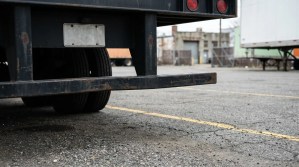
The Steel Bar That Stands Between a Car and a Trailer
Key Takeaways: An underride guard is the steel bar mounted at the rear of a tractor-trailer that is supposed to stop a passenger vehicle from sliding beneath it, and its failure can turn a survivable rear-end collision into a catastrophic or fatal one. Federal rules under 49 C.F.R. § 393.86 set minimum height, clearance, and strength standards that vary by manufacture date, while New York enforces commercial vehicle equipment duties through its Vehicle and Traffic Law and state rules adopting federal motor carrier safety regulations. Compliance alone doesn’t settle the question, because corrosion, prior damage, improper repair, or weak welds can cause a conforming guard to shear off on impact. Liability may extend beyond the driver to the motor carrier, trailer owner or lessor, maintenance contractor, or manufacturer under negligence and products liability theories. These claims depend heavily on preserved evidence, the trailer itself, inspection and maintenance records, event data recorder downloads, and scene photographs, all of which can disappear quickly. Deadlines are also unforgiving: most New York injury suits are due within three years under CPLR § 214, wrongful death within two years of death under EPTL § 5-4.1, narrow discovery-based timing rules under CPLR § 203(g), and far shorter notice requirements when a municipal defendant is involved.
An underride guard is the steel barrier mounted at the back of a tractor-trailer, designed to stop a passenger vehicle from sliding beneath it during a rear-end collision. When it works, the car’s crumple zones and airbags perform as designed. When it fails, the trailer bed can enter the passenger compartment at windshield height, which is why underride guard truck accident injuries are so often catastrophic or fatal. For families in the Five Boroughs, the condition of that guard is frequently one of the most important physical facts in the case.
If you or a loved one was hurt in a collision with a commercial trailer in New York City, the evidence may disappear faster than you think. The team at Pianko Law handles serious commercial vehicle claims throughout Manhattan, Brooklyn, Queens, the Bronx, and Staten Island. Call (646) 801-9675 or contact us now to discuss preserving the trailer, inspection records, and crash data before they’re lost.
How Rear Impact Guards Are Supposed to Work
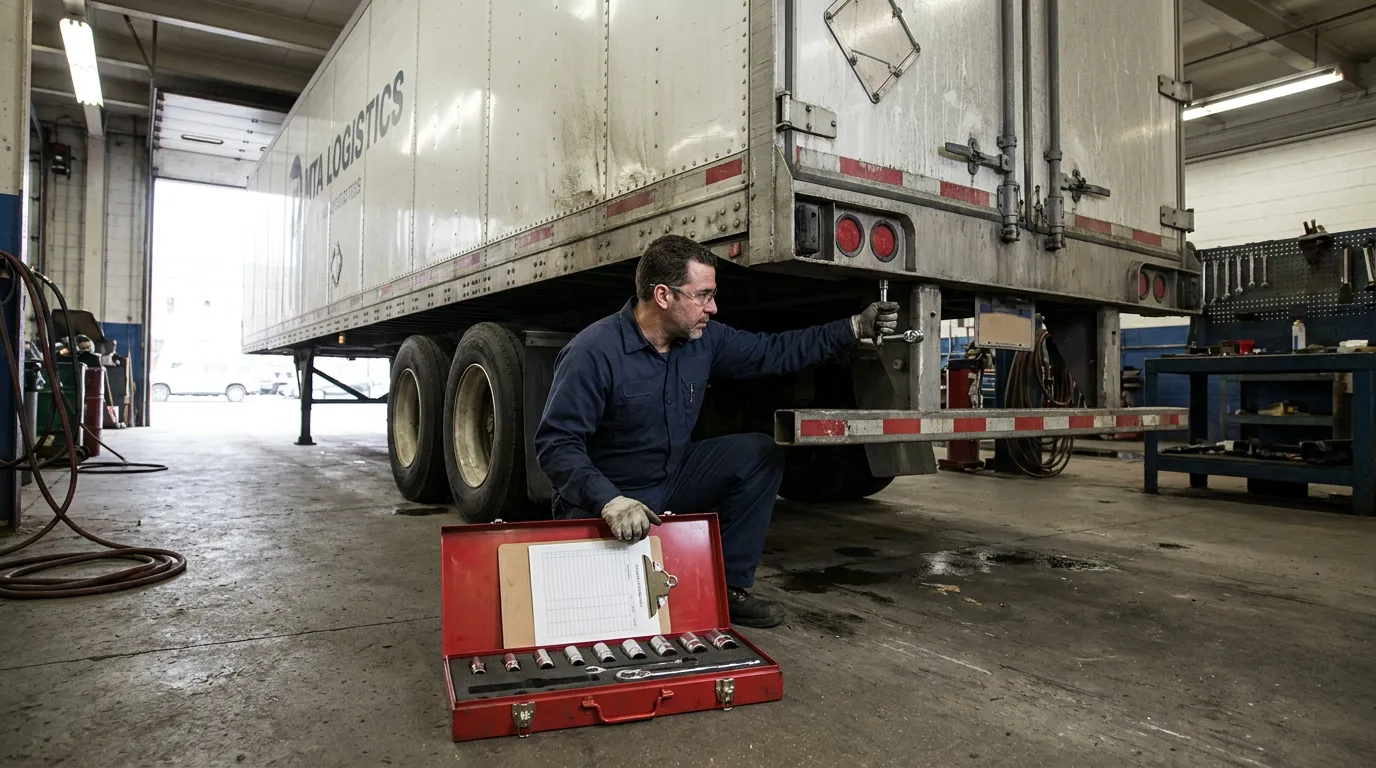
A rear impact guard is a horizontal bar suspended below the rear of a trailer at a regulated height, supported by vertical attachments welded or bolted to the frame. Federal rules under 49 C.F.R. § 393.86 establish minimum dimensions, clearance, and strength requirements, with different standards for trailers manufactured before or after January 26, 1998, and exceptions for certain vehicle types. Separate manufacturing standards, FMVSS Nos. 223 and 224, govern the guards as installed. The FMCSA’s guidance on rear impact guard requirements explains that the goal is preventing a smaller vehicle from traveling underneath the trailer body in a rear-end impact.
The physics matter enormously. A passenger car absorbs energy through its front structure, but an underride crash can bypass that structure entirely. Occupants may suffer severe head, neck, and thoracic trauma even at speeds that would otherwise be survivable, a recurring theme in legal literature on guard design and failure.
Why Compliance Alone Does Not End the Inquiry
Meeting the federal minimum doesn’t necessarily mean a guard performed as a reasonably safe design should. Regulatory history reflects sustained criticism that existing standards are outdated, and reform proposals have circulated for years. FMCSA’s rulemaking docket on underride guard standards addresses both rear and side protection, and that national proceeding generally applies to carriers operating in New York. Materials in a rulemaking docket aren’t binding law, and whether federal standards preempt a state-law design defect claim can itself be contested.
A trailer may have carried a technically conforming guard that still sheared off on impact because of corrosion, prior collision damage, improper repair, or a weak attachment weld. These factual questions generally require inspection and engineering analysis, and outcomes depend heavily on the evidence developed.
Where New York Law Fits Into Underride Guard Truck Accident Injuries
New York imposes its own equipment obligations on commercial vehicles, layered on top of federal rules. The Vehicle and Traffic Law governs required equipment for vehicles on New York roads, including commercial trailers moving through NYC. New York also adopts much of the Federal Motor Carrier Safety Regulations by reference for intrastate carriers, so the federal rear guard standard can apply through more than one path. Citing the specific statutory provision gives a claim a more verifiable legal anchor, and which provision governs depends on the vehicle, carrier, and route involved.
Where a statutory equipment requirement exists and a violation causes the type of harm the rule was meant to prevent, New York courts may treat the violation as bearing on negligence. An unexcused violation of a state statute imposing a specific duty is generally negligence per se, while violations of administrative regulations or municipal ordinances are generally only some evidence of negligence. Even where negligence per se applies, the claimant must still prove causation and damages, and comparative fault may reduce recovery. This distinction is fact-sensitive, so no one should assume a missing guard automatically resolves liability.
Product Liability Runs Alongside Negligence
A defective or inadequately designed guard can also support a claim against parties other than the driver. Legal commentary on underride litigation analyzes both negligence and products liability theories arising from guard non-compliance or structural failure. Potential defendants may include the motor carrier, trailer owner or lessor, a maintenance contractor, or the manufacturer. Design defect claims in New York generally require proof of a feasible safer alternative design, and product claims carry their own timing rules.
Identifying every responsible party early matters more in trucking cases than in ordinary car crashes, since ownership, leasing, brokerage, and maintenance are often split among several entities. Our discussion of who can be held liable walks through how these relationships are commonly untangled under New York law.
💡 Pro Tip: Photograph the rear of the trailer from multiple angles at the scene if safe to do so. A clear image showing a bent, missing, or rusted rear bar can become a pivotal exhibit months later.
Evidence That Tends to Decide These Cases
Underride claims often depend on physical and documentary proof, gathered before it degrades. Plaintiffs must establish negligence by a preponderance of the evidence, which may require more than the police report alone, often inadmissible in whole or part as hearsay. The following categories of proof frequently carry weight:
- The trailer itself, preserved before repair, scrapping, or return to service
- Annual inspection reports, maintenance logs, and repair invoices for the rear impact guard
- Event data recorder downloads and electronic logging device records showing speed and braking
- Photographs and scene measurements documenting underride depth and intrusion
- The trailer’s VIN, manufacture date, and any recall or service bulletin history
A written preservation demand sent promptly to the carrier is often the practical first step. Trailers are commercial assets that may be repaired and redeployed quickly, and once a damaged guard is cut off and replaced, a central piece of evidence can be gone. Courts may impose spoliation sanctions if evidence is destroyed when a party was on notice of its relevance, but available remedies vary and are never guaranteed.
Insurance and Procedural Realities in NYC Truck Crash Claims
New York’s no-fault system generally provides first-party benefits regardless of fault, but it isn’t the end of the road in a serious truck case. Insurance Law § 5103(b) identifies circumstances in which an insurer may exclude a person from mandatory first-party benefits, including injuries from intentional self-harm or intoxicated or drug-impaired operation. Under Insurance Law § 5105, an inter-company loss transfer mechanism between insurers is triggered when at least one vehicle involved in an accident weighs more than 6,500 pounds unloaded or is used principally for the transportation of persons or property for hire, and a bodily injury suit arising from a motor vehicle accident generally requires a "serious injury" under Insurance Law § 5102(d).
Discovery rules may also give claimants a meaningful early window into available coverage. Under CPLR § 3101(f), as amended by the Comprehensive Insurance Disclosure Act, a defendant is generally required to disclose applicable insurance agreements, including primary, excess, and umbrella coverage and total limits available, within 90 days of serving an answer, subject to exceptions in the statute. That disclosure can often indicate whether a carrier’s policy limits realistically reach the scale of a catastrophic New York truck injury.
| Legal Issue | Governing Authority | Practical Significance |
|---|---|---|
| Rear guard equipment standards | 49 C.F.R. § 393.86 | Baseline federal compliance benchmark |
| NY commercial equipment rules | VTL equipment provisions and state-adopted FMCSR | State duty applicable in NYC |
| No-fault benefit exclusions | Insurance Law § 5103(b) | Affects early medical coverage |
| Insurance disclosure | CPLR § 3101(f) | Reveals available policy limits |
| Discovery-based timing | CPLR § 203(g) | Narrow, fact-dependent timing rule |
Deadlines and the Limits of the Discovery Rule
Most New York personal injury actions must be filed within three years of the crash under CPLR § 214(5), and wrongful death actions within two years of death under EPTL § 5-4.1. Where a filing deadline is instead measured from discovery of facts, CPLR § 203(g) provides that the action must be commenced within two years after actual or imputed discovery or within the otherwise applicable period, whichever is longer. The text of CPLR § 203 sets out that framework in full.
New York applies discovery-based accrual only where a statute specifically provides for it; it does not apply automatically. A commercial trailer defect such as a non-compliant or missing rear guard may not surface until an accident reconstruction is complete, but in an ordinary negligence case the clock generally runs from the date of injury, not from the date the defect is identified. Claims involving a municipal defendant may require a notice of claim within 90 days of accrual and suit within one year and 90 days, deadlines distinct from the general statute of limitations that should be evaluated immediately. Tolls and extensions, such as those for infancy or disability, can also change these dates, so individual assessment is essential.
Frequently Asked Questions
1. Does a missing underride guard automatically prove the trucking company was negligent?
No. A missing or damaged guard may be significant evidence, but a claimant must still establish duty, breach, causation, and damages. Whether a violation supports negligence per se or merely evidence of negligence depends on whether the requirement comes from a state statute or a regulation.
2. What if the guard was present but still failed?
Guard failure claims are common and often turn on design or maintenance. Corroded mounts, prior unrepaired damage, or an attachment that meets only minimum strength requirements can all contribute. These cases generally require engineering analysis of the guard, trailer frame, and crash forces involved.
3. Can a pedestrian or cyclist bring an underride claim?
Potentially, depending on circumstances. Side underride exposure is a recognized concern in dense urban traffic, and federal rulemaking has examined side protection, though no federal rule currently requires side underride guards on trailers. Liability still depends on proving fault and causation under New York law.
4. How quickly should a family act after a fatal underride collision?
As soon as reasonably possible. Trailers may be repaired, electronic data may be overwritten, and witness memories fade. Early preservation demands and prompt consultation may give a claim a better chance of being supported by intact evidence.
5. Who might be responsible besides the truck driver?
Potentially the motor carrier, trailer owner, lessor, maintenance provider, or manufacturer. Employers may face vicarious liability under respondeat superior for a driver acting within the scope of employment, and separate claims may exist for negligent maintenance, negligent hiring or supervision, or defective design.
Bringing the Pieces Together After a Serious Trailer Collision
Underride crashes can differ from ordinary rear-end collisions because a piece of trailer safety equipment stood between the occupants and severe harm, and something about that equipment may not have held. Building a claim generally means combining federal standards, New York’s commercial equipment requirements, preserved physical evidence, and electronic crash data into a coherent account of what failed and why. Every case turns on its own facts, and no outcome can be promised in advance.
If a rear impact guard failure changed your family’s life, you do not have to reconstruct what happened alone. Pianko Law represents injured people and grieving families in underride guard truck accident injuries lawyer matters across New York City. Reach Pianko Law’s office by calling (646) 801-9675, or schedule a consultation to have your case reviewed.
Disclaimer: This content is for informational purposes only and is not legal advice. Every case is unique, and results may vary. Consult an attorney about your specific circumstances.