Untangling Liability When a Double-Parked Vehicle Causes a Crash in NYC
Key Takeaways: In NYC, fault in a double-parked car accident most often rests with the driver who left the vehicle in the roadway, since VTL § 1202(a)(1) generally prohibits stopping, standing, or parking on the roadway side of another parked vehicle. A documented violation may be treated as negligence per se, but the injured person must still prove causation and damages, and exceptions for loading, traffic signals, or unavoidable conditions may apply. Other parties, including speeding or distracted motorists, commercial employers under respondeat superior, and occasionally municipal entities, may share responsibility. New York’s pure comparative fault rule under CPLR § 1411 reduces damages in proportion to the claimant’s share of fault rather than barring recovery. Pain and suffering claims must also satisfy the serious injury threshold in Insurance Law § 5104(a), using the definition in § 5102(d), and short deadlines under Insurance Law § 5208 for MVAIC claims can quietly undermine a claim. Prompt evidence preservation, medical treatment, and legal guidance can protect your rights.
Fault often falls on the driver who left the vehicle in the roadway, since stopping, standing, or parking on the roadway side of another parked vehicle is generally prohibited under VTL § 1202(a)(1). That said, liability is rarely all-or-nothing. A moving driver who failed to keep a proper lookout, a cyclist who swerved without signaling, or a delivery van operating under a loading exception can all shift the fault analysis, and New York’s comparative negligence rules generally allow damages to be apportioned among multiple parties.
If you were hurt in a double parking accident in NYC, the team at Pianko Law can review the police report, photographs, and witness accounts to evaluate how fault may be allocated in your case. Call (646) 801-9675 or contact us now to discuss your options with a plaintiff-side injury firm.
What New York Law Says About Double Parking
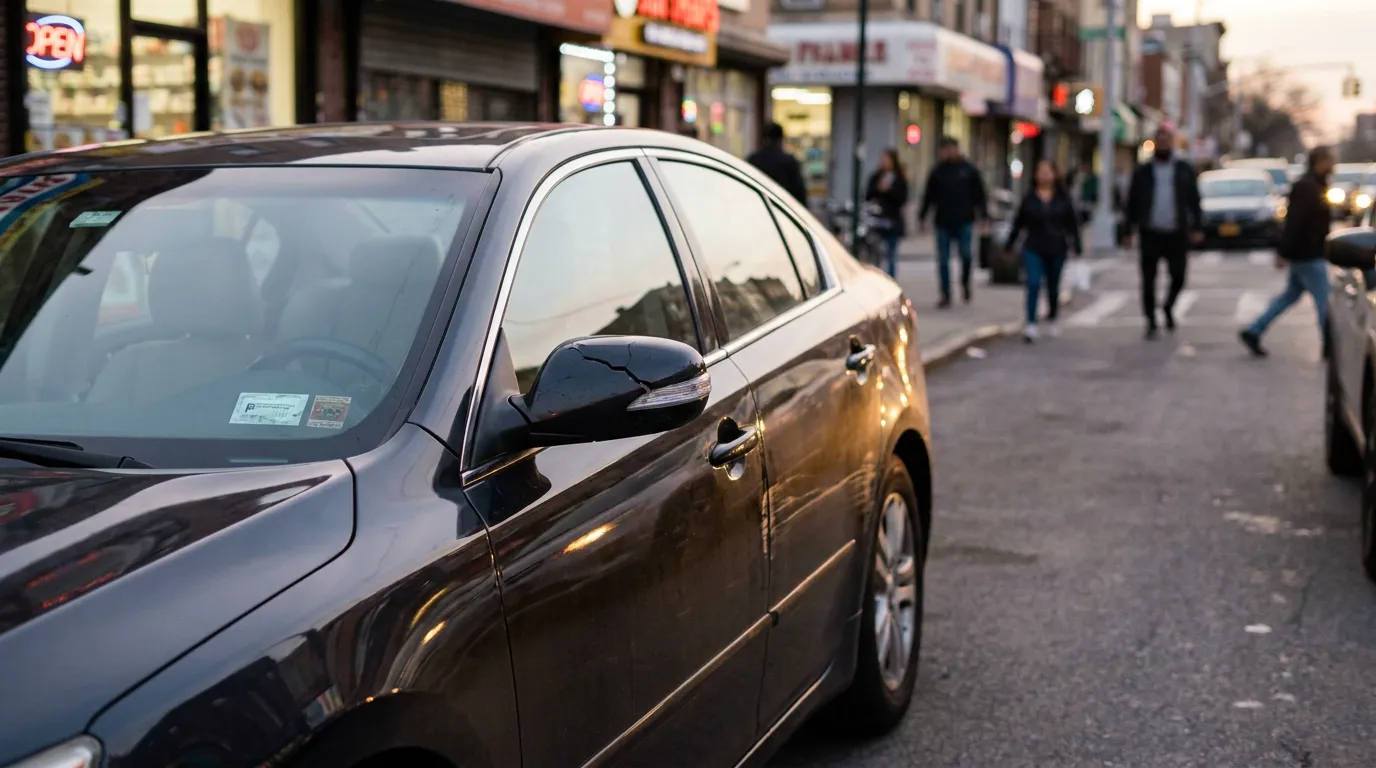
Double parking is restricted by state statute, not merely local custom. Article 32 of the Vehicle and Traffic Law governs lawful vehicle placement statewide, including all five boroughs. Section 1202(a)(1) prohibits stopping, standing, or parking on the roadway side of any vehicle stopped or parked at the curb, except as otherwise provided.
The statutory vocabulary matters. VTL § 1200 and Article 1’s definitions of "stop," "standing," and "park" establish the framework used throughout the Vehicle and Traffic Law. A momentary halt to discharge a passenger may be treated differently from leaving a vehicle unattended, and the difference between no parking and no standing signs often becomes a contested point.
City authority adds another layer. VTL § 1640(a) applies to any city or village and grants local power to regulate stopping, standing, or parking on public highways. VTL § 1642, which applies specifically to cities with a population in excess of one million, grants broader additional traffic regulatory powers that form a key legal foundation for NYC’s traffic rules. Unlike violations of the state statute, violations of local rules are generally treated only as some evidence of negligence rather than negligence per se.
Exceptions That Complicate Fault Determination
Not every vehicle sitting in the roadway violates the statute. VTL § 1202(a) lists exceptions, including stops made in obedience to a traffic signal or police direction, or where stopping is unavoidable due to traffic conditions. Commercial vehicles actively loading or unloading may also fall within limited city carve-outs, though these are narrower than drivers often assume.
Common factual disputes include:
- Whether the vehicle was truly in the roadway or partially within legal curb space
- Whether hazard lights, cones, or commercial markings were visible
- Whether the operator was actively loading or had simply left the vehicle
- Whether traffic congestion or a signal made the stop unavoidable
- Whether a passenger door opened into the path of a cyclist or motorcyclist
How Negligence Per Se Shapes Double Parked Car Accident Fault
When a driver violates a specific traffic statute and that violation causes the type of harm the statute was meant to prevent, courts may treat the violation as negligence in itself. In New York, an unexcused violation of a Vehicle and Traffic Law provision constitutes negligence per se, meaning the injured party need not separately prove unreasonableness but must still prove the violation proximately caused the injury and resulting damages. Because double parking restrictions sit within this statutory scheme, a documented violation may be a meaningful building block in a claim.
Negligence per se is a starting point, not a verdict. A defendant may argue a statutory exception applied, that the violation didn’t cause the collision, or that the injured person’s own conduct was a substantial factor. Outcomes remain fact-dependent.
Other Parties Who May Share Responsibility
Fault frequently extends beyond the parked driver. An oncoming motorist who was speeding, texting, or following too closely may bear a share. If a commercial vehicle was double parked during a delivery, the employer may face exposure under respondeat superior when the operator acted within the scope of employment.
Municipal or contractor conduct occasionally enters the picture. Obstructed sightlines, missing signage, or a blocked bike lane may involve additional parties, though claims against public entities require a notice of claim, generally within 90 days, and follow separate procedural rules. Anyone considering that path should evaluate it early, since these requirements are often interpreted strictly.
💡 Pro Tip: Photograph the double-parked vehicle’s position relative to the curb line and the vehicle beside it before anything moves. That single frame can often help resolve the central factual dispute.
Comparative Fault in an NYC Car Accident Claim
New York does not bar recovery simply because an injured person shares some blame. Under New York’s pure comparative fault rule, a damages award is reduced in proportion to the claimant’s percentage of fault. CPLR § 1411 provides that a plaintiff’s culpable conduct does not bar recovery but diminishes the award in proportion to the plaintiff’s share of the total culpable conduct.
In practice, insurers often lean hard on comparative fault in double parking cases, arguing the approaching driver or cyclist should have seen and avoided the obstruction. If you’re worried your own driving contributed, it’s still worth learning whether you can sue if partially at fault before accepting an insurer’s characterization of the crash.
The Serious Injury Threshold and Your Right to Sue
New York’s no-fault system limits when an injured person may pursue pain and suffering damages. Insurance Law § 5104(a) provides that there is no right of recovery for non-economic loss arising from motor vehicle negligence except in the case of a serious injury, or for basic economic loss. "Serious injury" is defined by the categories in Insurance Law § 5102(d), and meeting that threshold is often the pivotal issue in a double parked car injury claim.
Documentation drives threshold arguments. Consistent treatment records, objective imaging, and physician opinions on limitation of use generally carry more weight than subjective complaints alone. Gaps in care are routinely used to challenge whether an injury qualifies.
| Legal Issue | Governing Authority | Why It Matters |
|---|---|---|
| Illegal double parking | VTL § 1202(a)(1) | May support negligence per se |
| Statutory definitions | VTL § 1200 and Article 1 | Distinguishes stopping, standing, parking |
| NYC regulatory power | VTL § 1642 | Basis for city parking rules |
| Shared blame | CPLR § 1411 | Damages reduced proportionately, not barred |
| Pain and suffering | Insurance Law §§ 5104(a), 5102(d) | Serious injury threshold may apply |
| Uninsured or unidentified driver | Insurance Law § 5208 | Short affidavit/notice condition precedent |
Timing Issues That Can Quietly Undermine a Claim
Several deadlines may run in parallel after a double parking crash, and they are not interchangeable. The basic statute of limitations for a negligence action is generally three years under CPLR § 214, while no-fault benefit claims have far shorter notice deadlines set by regulation. Separately, Insurance Law § 5104(b) gives an insurer a cause of action for first-party benefits paid if the covered person fails to commence an action within two years of accrual; this addresses insurer reimbursement rights and does not shorten the civil statute of limitations for the injured person’s claim.
Uninsured and unidentified vehicles carry their own condition precedent. Under Insurance Law § 5208, a person with a bodily injury claim arising from a New York accident must file an affidavit with MVAIC as a condition precedent to payment, generally within 180 days where the claim is against a designated uninsured vehicle’s owner or operator, and within a shorter period for hit-and-run claims. Courts generally interpret extensions of such deadlines narrowly, and no tolling should be assumed to apply automatically.
Practical Steps After a Double Parking Collision
What you do in the first days often determines what evidence still exists later. Request the police report, identify nearby businesses with exterior cameras, and note whether the vehicle bore commercial plates or a fleet number. Seek prompt medical evaluation even if symptoms seem mild, since delayed onset is common with soft tissue and head injuries.
Preserve the regulatory context as well. Reviewing the city’s parking regulations can help you understand which standing and stopping restrictions applied on that block, and whether an exemption plausibly covered the other driver. Working with a firm that handles double parking crash attorney NYC matters can help ensure evidence is secured while it remains available.
💡 Pro Tip: If a delivery van was involved, ask early whether route logs or telematics data exist. Those records are often overwritten on short retention cycles.
Frequently Asked Questions
1. Is the double-parked driver automatically at fault?
No. A violation of VTL § 1202(a)(1) may establish negligence, but the injured person must still prove causation and damages, and the defense can raise statutory exceptions or argue another driver’s conduct caused the collision.
2. Can I recover if I hit a double-parked car myself?
Possibly. New York applies pure comparative fault, and CPLR § 1411 directs courts to reduce damages proportionately rather than eliminate recovery.
3. What if the double-parked vehicle was uninsured?
A narrow filing window may apply. Insurance Law § 5208 sets short affidavit and notice requirements, generally 180 days for designated uninsured vehicle claims, as a condition precedent to seeking MVAIC payment. Acting quickly is generally advisable.
4. Does a parking ticket prove liability?
Not by itself. A summons is useful documentation, but a ticket alone is not an adjudication of the violation and does not establish causation or damages. Courts may consider it alongside other evidence.
5. Do passengers and cyclists have claims too?
Yes, in many cases. Passengers, cyclists, and pedestrians injured in a double parking crash may pursue claims, and those who are covered persons under the no-fault law remain subject to the serious injury threshold under Insurance Law § 5104(a) and to comparative fault principles.
Where This Leaves Injured New Yorkers
Fault in a double-parked car accident in NYC generally turns on statutory violations, available exceptions, and how a court or insurer apportions blame among everyone involved. VTL §§ 1200, 1202, and 1640 address lawful vehicle placement, while CPLR § 1411 and Insurance Law §§ 5102, 5104, and 5208 may shape what an injured person can recover and when action must be taken. Because these issues are fact-sensitive, general information cannot substitute for a review of your own record.
If you are trying to sort out who is at fault in a double parked car crash and what your claim may be worth, reach out to Pianko Law for a case review. Call (646) 801-9675 or schedule your consultation today.
Disclaimer: This content is for informational purposes only and is not legal advice. Every case is unique, and results may vary. Consult an attorney about your specific circumstances.