Understanding Your Rights After a Fatal Passaic County Crash
Key Takeaways: Yes, you can recover compensation in New Jersey even if partially at fault. The state’s modified comparative negligence rule (N.J.S.A. 2A:15-5.1) permits recovery when your fault doesn’t exceed the other party’s, with awards reduced by your percentage of responsibility. The 33 traffic deaths in Passaic County in 2024 highlight how fault, evidence, and legal deadlines shape families’ rights to seek accountability. Drivers must report crashes immediately to police and file written reports within 10 days under N.J.S.A. 39:4-130. Most personal injury lawsuits carry a two-year deadline, while victim compensation programs follow separate timelines. New Jersey protects claimants from rushed settlements, making releases signed within 30 days unenforceable without written disclosure and allowing rescission within 10 days. Every case is fact-sensitive, requiring careful evaluation and informed legal guidance.
Yes, you may still recover compensation even if partially at fault for a crash in Passaic, New Jersey. New Jersey follows modified comparative negligence, allowing injured persons or families of deceased victims to pursue damages when their fault doesn’t exceed the other party’s. When headlines reported roughly three dozen traffic deaths across the county in 2024, many families wondered whether shared responsibility would erase their right to accountability. The reality is more nuanced, and understanding the governing rules is essential to protecting a claim.
If you are weighing your options after a serious collision, the team at Pianko Law is ready to listen. Call us at (862) 295-7588 or reach out through our online consultation request to discuss how New Jersey law may apply to your situation.
The Human Toll Behind Passaic County Traffic Statistics
The 33 traffic deaths in Passaic County in 2024 represent far more than statistics. Each fatality reflects a family navigating grief while confronting medical bills, funeral costs, and lost income. Fatal and serious crashes raise questions about responsibility and available compensation.
Many collisions occur at busy junctions where competing traffic, poor visibility, and driver inattention converge. Our discussion of why intersection accidents in Passaic rose in 2024 offers context on where and why these crashes happen. Understanding local crash patterns helps victims and families appreciate how liability is evaluated.
💡 Pro Tip: After any serious crash, request a copy of the police crash report as soon as available. It often contains diagrams, witness details, and officer observations that prove valuable when fault is disputed.
Can I Get Compensation if I Was Partially at Fault?
The question "can i get compensation if i was partially at fault" is one of the most common concerns after a serious collision. New Jersey’s comparative negligence statute, N.J.S.A. 2A:15-5.1, governs how shared fault affects recovery. The law doesn’t provide a rigid formula, fault is determined case by case based on specific facts.
Your degree of responsibility directly influences both eligibility and award size. Under New Jersey’s Comparative Negligence law, your fault cannot exceed the fault of parties from whom damages are sought. If your share exceeds the other party’s, recovery is barred. At a 50/50 split, recovery is permitted but reduced by your percentage.
Because fault allocation is fact-sensitive, whether you can get compensation depends on evidence. Police reports, photographs, vehicle damage, and witness statements influence how courts or insurers apportion blame. No two cases are weighed identically, so outcomes depend on specific circumstances.
💡 Pro Tip: Avoid apologizing or speculating about fault at the scene. Casual statements can be interpreted as admissions and may complicate how your responsibility is assessed.
Reporting Duties After a Serious Crash
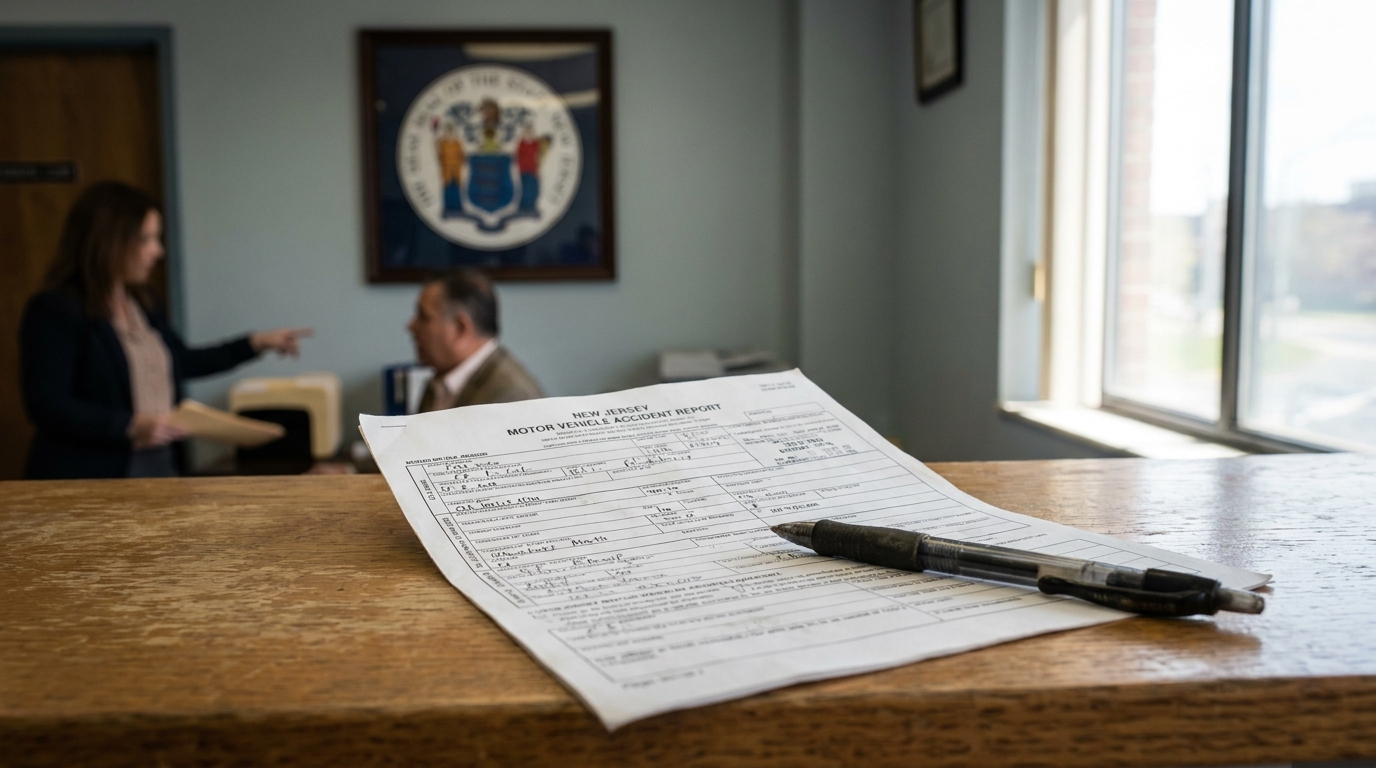
New Jersey law imposes specific reporting obligations on drivers. Under N.J.S.A. 39:4-130, drivers involved in accidents resulting in injury, death, or property damage exceeding $500 must immediately notify local police, county police, or State Police by the quickest means of communication.
A written report is also required. The same statute requires drivers to forward a written report within 10 days to the commission on provided forms. Review the full text of the New Jersey accident reporting statute to understand these duties. Compliance satisfies legal requirements and preserves an official record supporting later injury claims in Passaic County.
💡 Pro Tip: Keep copies of every report you submit and note the date and method of notification. Documentation of timely compliance can counter arguments that you failed to meet legal requirements.
Deadlines That Can Make or Break Your Claim
Time limits play a decisive role in whether auto accident claims can proceed. The New Jersey courts explain that the statute of limitations for personal injury actions is governed by N.J.S.A. 2A:14-1 et seq. Various factors may alter standard time periods.
For most personal injury actions, the default civil deadline is two years from the date of injury. Courts interpret exceptions such as tolling or the discovery rule narrowly, and these doctrines don’t apply automatically. You should not assume extensions apply without legal analysis of your specific facts.
Civil lawsuit deadlines differ from administrative claim deadlines. Applications under the state’s victim compensation program follow independent timelines. Under N.J.S.A. 52:4B-18, no compensation order shall be made unless application is filed within five years after personal injury or death (subject to good-cause exception), and incidents must generally be reported to law enforcement within nine months.
Key Deadlines at a Glance
| Action | General Timeframe |
|---|---|
| Immediate crash notice to police | By quickest means of communication |
| Written accident report to the commission | Within 10 days |
| Personal injury civil action | Generally 2 years |
| Victim compensation application | Within 5 years |
| Reporting incident to law enforcement (compensation eligibility) | Within 9 months |
Settlements, Releases, and Your Right to Reconsider
New Jersey provides protections when insurers seek quick settlements after accidents. Under N.J.S.A. 17:29B-15, no insurance release or waiver for personal injury or wrongful death executed within 30 days of an accident is enforceable unless the claimant first receives written disclosure regarding the right to seek legal representation.
Claimants also receive a window to reconsider early settlements. Releases signed within that 30-day period may be rescinded within 10 days following execution by the claimant. Any consideration exchanged must generally be returned. You can read the statutory language on these insurance release protections for fuller explanation.
Insurers may hold funds during this reconsideration period. The statute notes insurers may withhold settlement proceeds made within the 30-day period until the 10-day waiting period expires. These rules give injured people breathing room before signing away potential claims.
When evaluating a disputed claim, keep this checklist in mind:
- Confirm whether any release was signed within 30 days of the crash
- Note the signing date to calculate the 10-day rescission window
- Preserve all medical records and crash documentation
- Verify that required written disclosure was actually provided
💡 Pro Tip: If an adjuster pressures you to sign a release quickly, remember that rescission windows and disclosure requirements exist to protect you. Reviewing documents carefully before signing preserves options you might otherwise lose.
How Legal Guidance Can Support Your Claim
Navigating fault, deadlines, and insurer negotiations can be overwhelming after a serious or fatal crash. A knowledgeable Passaic auto accident attorney can help gather evidence, evaluate comparative fault, and communicate with insurers. Recognized injury firms focus on documenting injuries, preserving evidence, and building clear liability pictures.
If claims cannot be resolved through insurer internal processes, additional avenues remain available. All New Jersey auto insurers must maintain internal appeal processes, and unresolved disputes can be raised with the state’s insurance ombudsman office. Claimants generally retain the right to file suit in appropriate courts. For broader guidance, our overview for those seeking an auto accident attorney New Jersey residents trust explains how negligence claims typically proceed.
Frequently Asked Questions
1. Can I still file a claim if the police report suggests I share blame?
Possibly, depending on the degree of fault assigned. Under N.J.S.A. 2A:15-5.1, recovery is generally permitted when your fault doesn’t exceed the other party’s, though awards may be reduced by your percentage of responsibility. Because fault is assessed case by case, the police report is influential but not necessarily final.
2. How long do I have to bring a personal injury lawsuit in New Jersey?
The general personal injury deadline is two years under N.J.S.A. 2A:14-1 et seq. However, courts caution that various factors may alter standard periods. Exceptions are interpreted narrowly and don’t apply automatically, so prompt review of your specific facts is important.
3. Is the victim compensation program the same as suing the at-fault driver?
No, these are separate processes with different rules. Victim compensation under N.J.S.A. 52:4B-18 is an administrative program with its own filing requirements, generally capping awards at $25,000. Motor vehicle injury victims are often excluded unless the vehicle was used as a weapon in a deliberate attempt to run the victim down, though limited statutory exceptions may apply.
4. What should I do if an insurer asks me to sign a release within weeks of the crash?
Review it carefully and remember your statutory protections. Under N.J.S.A. 17:29B-15, releases signed within 30 days of an accident are unenforceable without required written disclosure, and you may rescind within ten days of signing. These safeguards give you time to make informed decisions.
5. What if my claim is denied after the internal appeal?
You may still have options beyond the insurer’s process. New Jersey insurers must maintain internal appeal processes, and unresolved disputes can be brought to the insurance ombudsman. Claimants generally retain the right to file suit in court even after those steps are exhausted.
Protecting Your Rights After a Passaic County Crash
The sobering count of fatal car accidents in Passaic, NJ during 2024 underscores how quickly lives can be affected by a single collision. New Jersey law offers meaningful protections, from comparative negligence rules allowing recovery when you share some fault, to reporting duties, filing deadlines, and safeguards against rushed settlements. Each rule carries exceptions and fact-specific nuances, so outcomes depend heavily on case details. Asking "can i get compensation if i was partially at fault" is a reasonable starting point, and the answer often turns on careful evaluation of evidence.
If you or a loved one has been seriously injured in a Passaic County crash, informed guidance can make a meaningful difference. Reach out to Pianko Law for a conversation about your situation, call us directly at (862) 295-7588, or submit your details through our secure contact form to learn how New Jersey law may apply to your claim.