Falling on a Wet Lobby Floor During a Snowstorm: Where Does New York Law Stand?
Key Takeaways: New York’s storm in progress rule can be raised in indoor fall cases, but it applies far more narrowly inside a building than on a sidewalk or parking lot. This judge-made defense may suspend a property owner’s duty to remedy snow and ice while a storm is in progress and for a reasonable time afterward, and it developed around outdoor, weather-exposed surfaces. Inside a lobby, the rationale weakens considerably because the owner controls the space and can often mop, place mats, or post warnings within minutes. Defendants must show a storm was actually ongoing at the time of the fall, and the source of the water, tracked-in slush, a leaking roof, or a mopping crew, can affect whether the defense applies at all. Comparative fault, assumption of risk, and strict filing deadlines, including notice of claim requirements for public entities, may also come into play. Prompt evidence preservation, photographs, incident reports, weather data, and surveillance video requests, can make a meaningful difference in these claims.
New York’s storm in progress rule can sometimes be raised in indoor fall cases, but it applies far more narrowly inside a building than on a sidewalk or parking lot. The doctrine generally suspends a property owner’s duty to clear snow or ice while precipitation is actively falling, and courts have at times considered storm conditions in claims involving entryways and lobbies where slush is tracked in. That extension isn’t automatic, and many New York decisions hold that the doctrine doesn’t by itself excuse interior conditions. If you fell on a wet marble floor in a Brooklyn apartment building or a Queens supermarket entrance, the owner may still have had control over interior conditions, and that control can matter significantly to your claim.
If a building owner or insurer is already pointing to the weather as a reason to deny your injury claim, the team at Pianko Law can review what actually happened. Call (646) 801-9675 or contact us now to discuss your options.
How the Storm in Progress Doctrine New York Courts Apply Actually Works
The storm in progress rule is a common-law defense, not a statute. It may suspend a property owner’s obligation to remedy snow and ice hazards until a reasonable time after the storm ends, on the theory that clearing an area during active precipitation is generally impractical. The New York State Bar Association has described it in practitioner materials as one of the more powerful defenses available in slip-and-fall litigation, developed around outdoor, weather-exposed surfaces. Even outdoors, the defense may not apply where a plaintiff shows the injury was caused by a pre-existing hazard, such as ice that formed before the storm and that the owner had notice of.
Because the rule is judge-made rather than legislative, its boundaries can shift with the facts of each case. New York’s Appellate Division panels have addressed how far the defense reaches, and results can differ between departments, so published decisions remain among the most reliable authority. Nothing in New York’s Real Property Actions and Proceedings Law creates the rule, and the one RPAPL provision that speaks to liability for building conditions, § 778(6), is narrowly aimed at court-appointed administrators of distressed properties rather than ordinary landlords or commercial tenants.
The Default Rule Before Any Exception Applies
Property owners in New York generally owe a duty to maintain their premises in a reasonably safe condition for lawful visitors. That baseline duty is the starting point for premises liability claims, and the storm in progress doctrine typically operates as a carve-out from it rather than a replacement. A defendant who cannot establish the elements of the defense generally remains subject to the ordinary standard of care.
Liability in most slip-and-fall matters often turns on notice. A plaintiff generally must show the owner either created the dangerous condition or had actual or constructive notice of it and a reasonable opportunity to correct it. Constructive notice generally requires that the condition be visible and apparent and exist long enough to permit discovery and remedy, which is why the timeline of when water appeared and how long it sat is often heavily litigated.
Why Indoor Falls Are Treated Differently
A building interior is not exposed to the weather, and that distinction can carry real legal weight. Courts have recognized that water, slush, and ice melt can migrate indoors on shoes, umbrellas, and carts during an active storm, and some decisions have treated ongoing weather as relevant context for those interior conditions. But the rationale behind the doctrine, that remediation is impractical while snow keeps falling, may lose much of its force inside a heated lobby where an employee can mop a puddle in two minutes. New York courts have also long held that a property owner isn’t necessarily liable merely because water was tracked in during a storm; the question is generally whether the owner had notice of a hazardous accumulation and failed to respond reasonably.
Defendants in NYC cases nonetheless often attempt to stretch the defense indoors, arguing the water came from the storm outside, so no duty attached. Plaintiffs’ counsel can push back by showing the owner controlled the interior space and failed to take reasonable mitigating steps. For a deeper look at how insurers frame this argument, our discussion of the storm in progress doctrine New York defendants rely on walks through the mechanics.
Reasonable Interior Precautions Courts May Consider
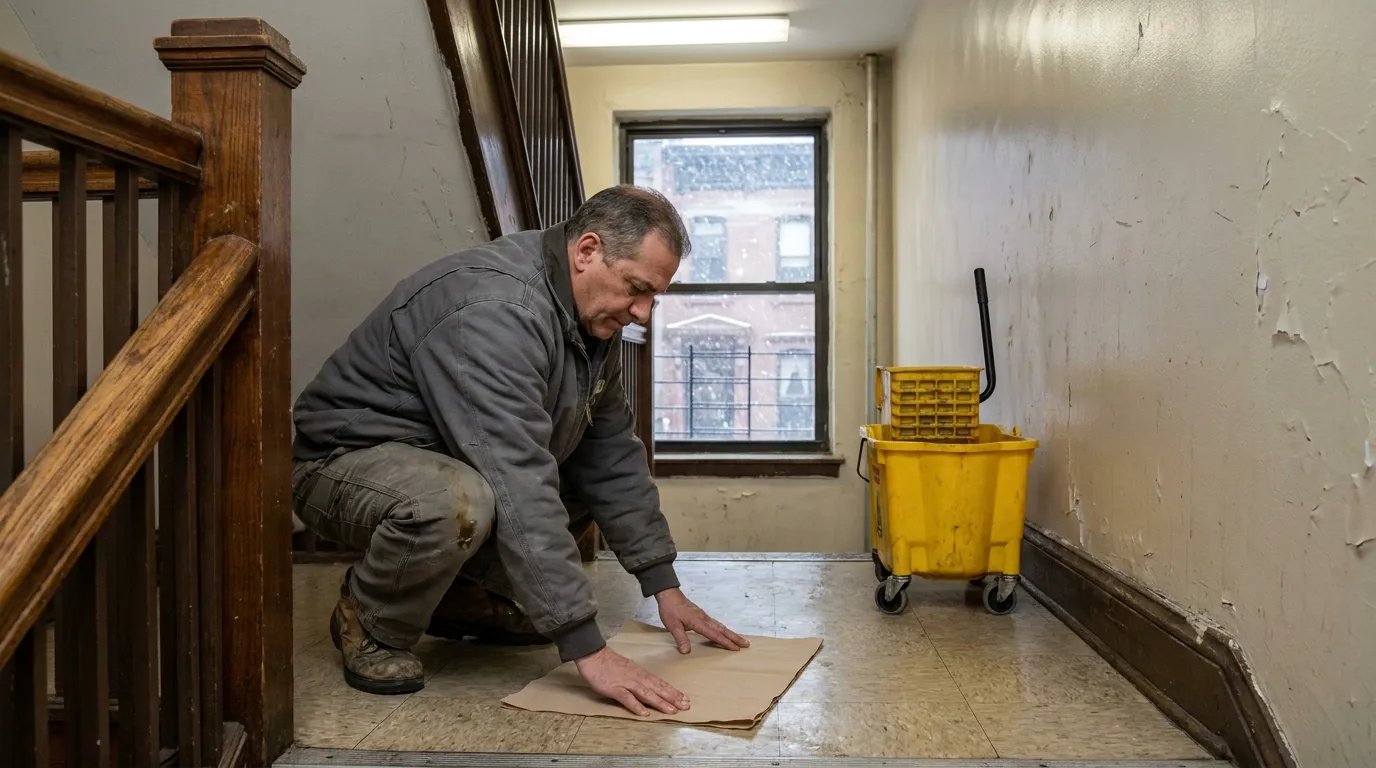
What a reasonable building operator does during a storm is often central to an indoor slip and fall case. Evidence that the owner ignored obvious, low-cost safety measures may undercut a weather-based defense, though owners generally aren’t required to cover floors entirely or mop continuously during a storm. Courts may consider:
- Whether absorbent mats or runners were placed at entrances and replaced when saturated
- Whether staff mopped or squeegeed high-traffic entry areas at reasonable intervals
- Whether warning cones or signage alerted visitors to a wet floor indoor fall NY hazard
- Whether the flooring surface itself was unreasonably slick when wet
- Whether cleaning logs, work orders, or camera footage document any response at all
None of these factors is necessarily dispositive on its own. Outcomes depend heavily on the specific record built in each case, including deposition testimony from porters, superintendents, and managers.
Outdoor Versus Indoor: A Practical Comparison
| Issue | Outdoor Fall (sidewalk, lot) | Indoor Fall (lobby, entryway) |
|---|---|---|
| Typical hazard | Accumulated snow or ice | Tracked-in water, slush, ice melt residue |
| Strength of storm defense | Often substantial during active precipitation | Frequently weaker; owner controls the space |
| Key factual question | Was the storm ongoing at the time of the fall | Did the owner have notice and take reasonable interior precautions |
| Common evidence | Certified weather records, photos | Mat placement, mopping logs, surveillance video |
| Timing dispute | Reasonable time after storm ended | Duration the puddle remained unaddressed |
💡 Pro Tip: Certified climatological data for the exact hour of your fall may either support or undercut a storm-in-progress argument. Requesting those records early, before memories fade and video is overwritten, can be one of the most valuable steps in a winter indoor fall lawsuit.
Proving a Storm Was Actually "In Progress"
The defense generally does not apply simply because it snowed at some point that day. A defendant moving for summary judgment generally carries the initial burden of establishing that a storm was ongoing, or that a reasonable time to remediate hadn’t yet passed, when the injury occurred, and that threshold question is frequently contested. Lulls in precipitation, storms that ended hours earlier, and conditions caused by refreeze of previously cleared snow can all complicate the analysis.
For interior falls, the causation question may add another layer. Water on a lobby floor may have come from the storm, from a leaking roof, from a broken radiator, or from a mopping crew that left the surface wet without signage. Establishing the actual source of the tracked-in water injury can influence whether the weather defense applies at all, since hazards unrelated to the storm are generally analyzed under ordinary notice principles.
Evidence That Frequently Matters
Documentation collected in the first days after a fall tends to carry significant weight. Photographs of the floor, the mats, and the surrounding area, taken before anything is cleaned up, are often difficult to replace. Incident reports, witness names, and a prompt written request that the building preserve surveillance footage can all shape what is available later in litigation.
Medical care can matter just as much as scene evidence. Head, neck, and fracture injuries sometimes present with delayed symptoms, and gaps in treatment may give insurers an argument that the fall wasn’t serious. Seeking evaluation promptly may protect both your health and the integrity of your claim.
Comparative Fault and Other Defenses You Should Expect
New York applies comparative fault, so an insurer may argue you share responsibility for the fall. Common assertions include inattention, inappropriate footwear, distraction by a phone, or disregard of a visible warning cone. Under New York’s pure comparative negligence statute, CPLR 1411, a percentage of fault assigned to an injured person reduces recovery proportionally rather than eliminating it, even where that percentage is large.
Assumption of risk arguments may also surface in winter cases. Defendants may suggest that anyone walking into a building during a snowstorm accepts the possibility of wet floors, although in New York express or primary assumption of risk is generally limited to contexts such as sporting and recreational activities, and in ordinary premises cases such arguments typically function as comparative fault rather than a complete bar. That framing is often contestable, particularly where the owner did little to address a known interior floor hazard in New York buildings with heavy foot traffic. Our overview of premises liability principles from the New York City Bar explains the underlying duty of care in plain terms.
Deadlines Deserve Early Attention
Personal injury claims in New York are subject to statutory filing deadlines, and missing one may end a case regardless of its merits. The general limitations period for personal injury negligence claims is three years from the date of injury under CPLR 214, but claims involving public entities such as the New York City Housing Authority or the City itself typically require a notice of claim within 90 days of the incident, with a shorter one-year-and-90-day period to sue. Those administrative notice requirements are distinct from the civil statute of limitations and aren’t interchangeable.
Tolling and late-notice relief exist, but courts generally apply them narrowly, in limited circumstances involving infancy or incapacity. Courts have discretion to permit a late notice of claim in some situations, so no one should assume an extension is available. Confirming your specific deadline early is generally the safer course.
Frequently Asked Questions
1. Can I still recover if I fell inside during an active snowstorm?
Possibly, yes. The storm in progress rule does not automatically bar an indoor claim. If the building had notice of a hazardous accumulation and failed to place mats, mop, or warn, a court may find the owner breached its duty regardless of the weather outside.
2. Does it matter that the water came from other people’s boots?
It can matter, but it rarely ends the analysis. Tracked-in moisture is often foreseeable during winter weather, and owners are generally expected to take reasonable steps to address it in high-traffic entrances, though they aren’t insurers of visitor safety.
3. What if the storm had stopped an hour before I fell?
That timing may weaken the defense. Owners generally have a reasonable time after a storm ends to address hazards, and what counts as reasonable is fact-specific and often a question for a jury.
4. What evidence should I gather after a building lobby fall claim?
Photograph the scene, report the incident in writing, and identify witnesses. Request preservation of video promptly, since many systems may overwrite footage within days or weeks.
5. Do these rules apply to apartment buildings as well as stores?
Generally yes. Residential landlords, commercial tenants, and managing agents generally owe duties to lawful visitors, though the precise scope depends on who owned, occupied, or controlled the area where the fall occurred.
What This Means for Your Case
New York’s storm in progress doctrine is a real defense, and insurers often raise it aggressively in winter cases. Inside a building, however, the argument may be harder to sustain, because owners generally retain control over their floors and can often take simple precautions that outdoor conditions do not allow. Whether the defense succeeds in any particular indoor ice melt slip or entryway fall may depend on the storm timeline, the source of the water, notice of the condition, the precautions taken, and the quality of the evidence preserved. No outcome can be predicted from general principles alone.
If a weather-based defense is standing between you and fair compensation, the team at Pianko Law is ready to evaluate your situation. Speak with a storm in progress doctrine New York lawyer by calling (646) 801-9675, or reach out today to get started.
Disclaimer: This content is for informational purposes only and is not legal advice. Every case is unique, and results may vary. Consult an attorney about your specific circumstances.