Protecting the Proof After a Commercial Truck Crash in New York City
Key Takeaways: A spoliation letter is a formal written notice to a trucking company and its insurer demanding preservation of all crash-related evidence, including ELD and hours-of-service data, dashcam video, driver qualification files, maintenance records, and black box downloads. It reinforces a party’s common-law duty to preserve evidence once litigation is reasonably anticipated, and makes it harder for the company to claim it didn’t know the evidence mattered. Under NY CPLR §3126, courts may impose sanctions for willful failure to disclose, ranging from an adverse inference charge to striking pleadings or default judgment, though such sanctions are discretionary. Speed matters because federal rules require carriers to retain duty status records for only six months, and electronic data can be overwritten sooner. Preserved records may be what ultimately allows an injured person to prove fatigue, deferred maintenance, or negligent hiring against a driver and carrier. Most plaintiff firms send the letter within days of being retained, so contacting counsel early helps preservation demands reach the correct carrier before retention cycles run.
A spoliation letter is sent to a trucking company and its insurer demanding preservation of all crash-related evidence, including electronic logging device records, dashcam video, driver qualification files, maintenance logs, and black box data. It documents notice that litigation is anticipated, triggering the common-law duty to suspend routine destruction of relevant records. Sent early, that letter can influence whether an injured New Yorker can later prove what the driver and company actually did.
If you were hurt in a collision with a tractor-trailer, box truck, or delivery vehicle anywhere in the five boroughs, timing matters more than most people realize. The team at Pianko Law can move quickly to issue an evidence hold and begin investigating liability. Call (646) 801-9675 or contact us now to discuss your situation.
What a Spoliation Letter to a Trucking Company Actually Does
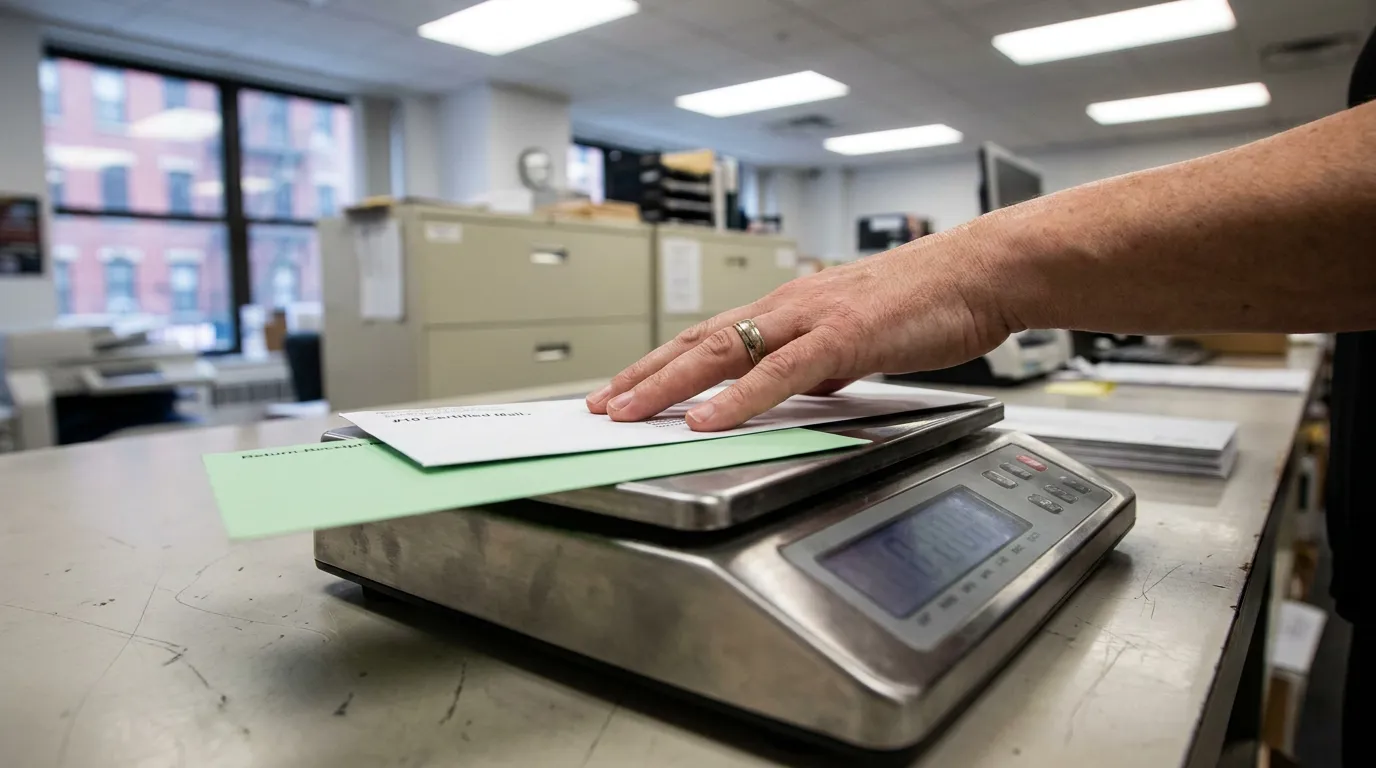
A spoliation letter puts the carrier on formal notice that litigation is reasonably anticipated and that specific evidence should be preserved. It typically identifies the crash by date, location, unit number, and driver, then lists each item the carrier should not discard, overwrite, repair, or sell, and asks for written confirmation that a litigation hold was distributed internally. The letter isn’t a court order; its force comes from the underlying preservation duty and how a court later views the carrier’s response.
A practical function is limiting any argument that the company didn’t know the evidence mattered. Once a carrier receives written notice, it becomes harder to characterize lost data as an innocent accident of routine business, though notice alone doesn’t establish a sanction is warranted.
The Legal Backbone: CPLR 3126
New York courts hold real authority to penalize a party that destroys relevant material. Under NY CPLR §3126, if a party "wilfully fails to disclose information which the court finds ought to have been disclosed," the court may resolve disputed issues in the other party’s favor, strike pleadings, stay proceedings, dismiss the action, or enter a default judgment. Courts also draw on inherent common-law authority to sanction spoliation occurring before any disclosure order or before suit is filed, since CPLR 3126 by its terms addresses disclosure in pending litigation. New York’s Commercial Division Rule 8(a), codified at 22 NYCRR § 202.70(g), directs parties to consult prior to preliminary or compliance conferences about electronic discovery obligations, with further specifics addressed in Rule 11-c, though most truck injury actions are venued outside that division.
Sanctions are discretionary, not automatic. Courts weigh the culpability of the party that lost the evidence, the prejudice caused, and whether a lesser remedy would suffice. New York courts have held that even negligent destruction can support a sanction where missing evidence deprives a party of the means to prove its claim, while less compromised cases may receive a lesser remedy such as an adverse inference charge rather than a case-ending sanction. Outcomes remain highly fact-dependent.
Why Truck Accident Evidence in New York Disappears So Fast
Federal retention rules are shorter than most crash victims assume. Under 49 CFR § 395.8, drivers subject to hours-of-service rules must keep a record of duty status, and § 395.8(k)(1) requires motor carriers to retain those records for six months from receipt. After that window, a carrier may lawfully discard the paperwork unless a preservation obligation has attached.
Electronic records can vanish even faster. The FMCSA explains that electronic logging devices "automatically record driving time and other Hours-of-Service (HOS) data accurately and automatically." Because this data is generated and transferred electronically under 49 CFR Part 395, Subpart B, it can be overwritten or lost during routine data management unless someone demands a hold. These federal standards apply to FMCSA-regulated carriers, and New York has adopted parallel requirements for many intrastate carriers.
| Evidence Type | Typical Risk Without a Hold |
|---|---|
| ELD / hours-of-service data | Overwritten in routine data cycles |
| Driver logs and supporting documents | Retention obligation may end after six months |
| Dashcam and in-cab video | Recorded over on short loops |
| ECM / black box download | Lost when the tractor is repaired or sold |
| Maintenance and inspection records | Archived, purged, or scattered across vendors |
💡 Pro Tip: Photograph the truck’s DOT number, trailer number, and carrier name at the scene if you safely can. These identifiers can help counsel address a spoliation notice to the correct entity rather than the wrong subsidiary.
Building a Truck Crash Claim Around Preserved Records
Preserved records may be what allows an injured person to prove negligence by a preponderance of the evidence. Hours-of-service data may show a fatigued driver. Maintenance files may reveal deferred brake repairs. Driver qualification records may support a negligent hiring, training, or retention claim against the employer, though New York courts generally dismiss such claims where the employer concedes the driver acted within the scope of employment and vicarious liability is undisputed.
Medical documentation runs on a parallel track and belongs to you. Careful records of treatment, missed work, and daily limitations may strengthen damages just as ELD data strengthens liability; our guidance on how to document injuries walks through that process. Consistency between what you report to providers and later testify to can carry weight.
Deadlines That Shape the Urgency
New York’s civil filing deadlines operate independently of federal retention rules. Personal injury actions are generally governed by the three-year period in CPLR §214, not the six-year catch-all in CPLR §213, which applies to contract, fraud, and other enumerated claims. Wrongful death claims carry a two-year period, claims against public entities like the City of New York generally require a notice of claim within 90 days followed by suit within one year and 90 days, and no-fault benefit applications carry much shorter deadlines.
Discovery-based timing rules exist but are narrow and claim-specific. New York applies discovery accrual only in defined circumstances, such as certain toxic exposure and fraud claims, and does not generally postpone accrual of an ordinary motor vehicle injury claim, which accrues on the crash date. No injured person should assume a delayed-discovery argument will extend a deadline; confirm the applicable date with counsel early.
Insurance Disclosure Once Litigation Begins
New York requires defendants to disclose coverage information after an answer is served. Under CPLR §3101(f) and §3122-b, a defendant generally must provide proof of the existence and contents of any insurance agreement under which it may be liable, along with contact information for the assigned claims adjuster. This complements an evidence hold by helping identify potential sources of recovery, though the obligation arises only once an action is pending.
When and How Counsel Sends a Spoliation Letter to a Trucking Company
Most plaintiff firms send the letter within days of being retained, sometimes the same day. Effective letters often share several features:
- Precise identification of the crash, vehicle, and driver
- An itemized list of documents, data, and physical evidence
- A demand that the tractor and trailer remain unrepaired pending inspection
- A request for written confirmation of the litigation hold
- Delivery by a method that creates proof of receipt
Sending the letter is a first step, not a guarantee. A preservation demand cannot compel a carrier to keep a damaged tractor out of service indefinitely, and securing physical evidence often requires a prompt agreement or court order. Some carriers comply fully, others partially, and disputes over what was preserved frequently surface later in discovery. An attorney experienced with motor carrier litigation can follow up with formal discovery demands, pre-action disclosure where appropriate, and motion practice.
💡 Pro Tip: Avoid giving a recorded statement to a carrier’s adjuster before your own evidence hold is in place. Early statements are often used to narrow what the company believes it must preserve.
Frequently Asked Questions
1. Can I send a spoliation letter myself?
Nothing prohibits an injured person from sending a preservation demand. That said, letters drafted without knowledge of which systems and record categories exist tend to be under-inclusive, and a carrier may preserve only what was specifically requested.
2. What happens if the trucking company ignores the letter?
A court may impose sanctions ranging from an adverse inference instruction to striking pleadings. Relief is not automatic and depends on proof that relevant evidence was lost after the duty to preserve attached, the degree of fault, and the resulting prejudice.
3. Does a spoliation notice start a lawsuit?
No. It is generally a pre-litigation demand and doesn’t commence an action or toll any statutory deadline. Separate filing requirements still apply.
4. What evidence should the letter cover in a New York truck crash?
Commonly ELD and hours-of-service data, driver qualification and training files, drug and alcohol testing records, dispatch communications, ECM downloads, telematics, dashcam footage, bills of lading, and maintenance and inspection histories.
5. How soon should I contact a truck accident lawyer in New York?
As early as possible. Guidance from a New York truck crash attorney may help preservation demands reach the correct carrier before short retention cycles run.
Moving Quickly Protects Your Case
A spoliation letter to a trucking company can be one of the most consequential documents in a commercial vehicle case, and its value may depend largely on how fast it goes out. Federal rules give carriers limited retention obligations, electronic data cycles run on their own schedule, and New York courts retain discretion, not an obligation, to sanction destruction. Outcomes always depend on the specific facts, the evidence available, and the applicable authority.
If a truck has upended your life or your family’s, the window to preserve truck records in New York may be closing while you read this. Reach Pianko Law at (646) 801-9675 or request a consultation to get an evidence hold underway.
Disclaimer: This content is for informational purposes only and is not legal advice. Every case is unique, and results may vary. Consult an attorney about your specific circumstances.