Falling on an Escalator in NYC: Understanding Who Can Be Held Responsible
Key Takeaways: Liability for an escalator fall in New York City usually rests with whoever owned, controlled, or maintained the equipment, a building owner, tenant, maintenance contractor, manufacturer, or a public entity like a transit authority, and often more than one party shares fault. Property owners generally owe visitors a duty of reasonable care, but winning a claim typically depends on proving actual or constructive notice of the defect through inspection logs, repair invoices, service histories, and surveillance footage. Claims against government entities generally require a notice of claim within 90 days under General Municipal Law § 50-e, a shortened limitations period, and, for certain conditions, prior written notice of the defect. Private claims generally fall under the three-year negligence deadline in CPLR § 214(5), with narrow exceptions. New York’s pure comparative negligence rule under CPLR § 1411 generally reduces recovery by the injured rider’s share of fault rather than barring the claim, and large future damages may be structured over time under CPLR Article 50-B. Acting quickly to preserve evidence and identify every responsible party can make a difference.
Escalators move millions of people through New York City every day, from subway stations to department stores. When a step collapses, a handrail jerks, a comb plate grabs a shoe, or an emergency stop throws riders forward, injuries can be severe: fractures, spinal damage, and traumatic brain injuries. Responsibility generally rests with whoever owned, controlled, or maintained the equipment, building owner, tenant, maintenance contractor, manufacturer, or a public entity such as a transit authority. Often more than one party shares responsibility, and identifying each early can make a meaningful difference.
If you or a loved one was hurt on an escalator anywhere in the five boroughs, the team at Pianko Law can review what happened and explain your options. Call (646) 801-9675 or reach out through our contact page to discuss your situation with a member of our team.
The Duty Property Owners Owe Escalator Riders
New York premises liability law generally requires property owners and operators to keep premises reasonably safe for foreseeable visitors, which may extend to mechanical equipment like escalators, moving walkways, and elevators. Since Basso v. Miller, landowners generally owe a single duty of reasonable care under the circumstances, rather than rigid visitor categories, with visitor status and foreseeability treated as factors in what care was reasonable.
Duty alone does not decide a case. A property owner is generally not an insurer of every visitor, and an injury alone does not establish fault. Liability generally turns on whether the owner’s conduct fell below the standard of reasonable care and caused the injury, a highly fact-dependent question.
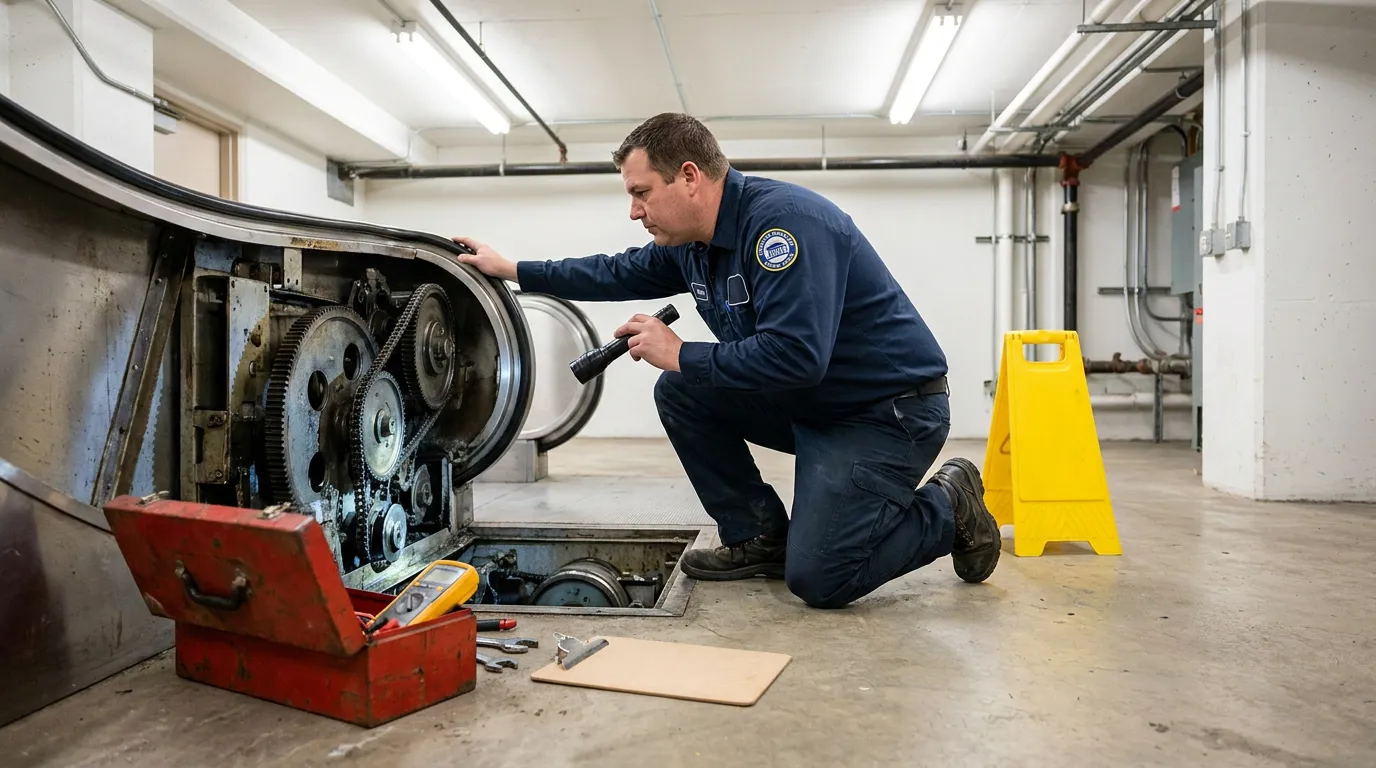
Escalator cases often involve layered relationships. A building owner may lease space to a retailer, who may contract with an outside maintenance company. Contracts can shift maintenance obligations between parties, but a maintenance contractor generally owes a direct duty to an injured rider only in limited circumstances recognized by New York courts, such as where it launched a force or instrument of harm, where the plaintiff detrimentally relied on its continued performance, or where it entirely displaced the owner’s duty. Sorting out these arrangements typically requires lease agreements, service contracts, and maintenance records obtained through discovery.
Proving Notice: The Heart of NYC Escalator Injury Liability
Establishing a premises liability claim generally requires showing that the owner or operator created the dangerous condition, or knew or should have known about it and failed to correct it in time. Actual notice means the responsible party was aware of the hazard, for example through a prior complaint or a technician’s report. Constructive notice means the condition was visible and existed long enough that a reasonably careful owner should have discovered and fixed it.
In escalator cases, notice evidence often lives in documents rather than eyewitness memory. Inspection logs, repair invoices, service histories, and prior injury reports can show a recurring defect that went unaddressed. Surveillance footage may capture both the fall and the equipment’s behavior beforehand. Where the mechanism was within a defendant’s exclusive control and the event would not ordinarily occur absent negligence, courts have sometimes permitted a res ipsa loquitur theory, allowing an inference of negligence without direct proof of notice.
Some escalator defects raise questions beyond ordinary premises claims. A design or manufacturing flaw may support a products liability theory alongside negligence against the owner. A negligently repaired unit may expose the maintenance contractor directly under the limited exceptions noted above. Because these theories carry different proof requirements, an attorney will typically preserve all of them until the facts become clearer.
Evidence That Frequently Matters After an Escalator Fall
- Photographs and video of the escalator, the step or handrail involved, and any warning or out-of-service signage
- The incident report filed with building security, store management, or station personnel, and who prepared it
- Contact information for witnesses, including other riders and responding employees
- Maintenance and inspection records, generally requested formally and preserved through a litigation hold letter
- Medical records documenting treatment from the earliest date, including delayed-onset symptoms like headaches, dizziness, or numbness
\u{1F4A1} Pro Tip: Send a written preservation request to the property owner and any maintenance company as soon as possible. Surveillance systems often overwrite footage on short cycles, and once it’s gone, it rarely comes back.
When the Escalator Belongs to a Government Entity
Claims involving escalators owned or maintained by a municipality or public authority generally follow a stricter procedural path. Subway station escalators, government buildings, and transit hubs generally fall into this category. Before suing a municipality, an injured person generally must serve a notice of claim within 90 days under General Municipal Law § 50-e, with the action itself commenced within one year and 90 days under § 50-i. Claims against the New York City Transit Authority and related MTA entities follow a parallel scheme under Public Authorities Law § 1212. These deadlines are far shorter than the general civil filing deadline, and courts apply them seriously.
New York law also limits municipal exposure for certain defective conditions through prior written notice rules. Under statutes such as Village Law § 6-628, Town Law § 65-a, and NYC Administrative Code § 7-201, no civil action may proceed for injuries caused by a defective, unsafe, or obstructed condition unless written notice was given to the designated official beforehand and the municipality failed to repair it. These statutes generally apply to streets, sidewalks, and similar locations, with narrow exceptions where the municipality created the defect or derived a special use benefit.
Missing a notice-of-claim deadline can end a case before the merits are considered. Courts may grant leave to serve a late notice in limited circumstances under General Municipal Law § 50-e(5), weighing whether the entity acquired actual knowledge within a reasonable time, whether the claimant had a reasonable excuse, and whether the delay prejudiced the defense, but such relief is discretionary and must generally be sought before the limitations period expires. Anyone injured on a subway or public-building escalator should treat the timeline as urgent.
Filing Deadlines That Control an Escalator Fall Claim
New York generally allows three years from the date of injury to commence a negligence-based personal injury lawsuit. CPLR § 214(5) governs actions for personal injury, except as provided in sections 214-b, 214-c, 214-i, and 215. This period would typically govern a claim against a private building owner, tenant, or maintenance company. See the statute of limitations overview from the New York State Unified Court System for general background.
Exceptions exist but apply narrowly. Tolling for infancy or insanity under CPLR § 208, discovery-based accrual for certain toxic exposures under CPLR § 214-c, and the two-year wrongful death period under EPTL § 5-4.1 each operate under their own rules and are interpreted strictly. Treating the shortest potentially applicable deadline as the real one is generally the safer approach.
| Type of Defendant | Governing Framework | Practical Timing Concern |
|---|---|---|
| Private building owner or tenant | CPLR § 214(5) negligence limitations period | Three years from the date of injury, subject to exceptions |
| Escalator maintenance contractor | Negligence and contract-based theories | Three years for negligence; contract claims follow CPLR § 213(2) |
| Municipal or public authority | GML §§ 50-e, 50-i; Public Authorities Law § 1212 for transit | Notice generally within 90 days; suit within one year and 90 days |
| Product manufacturer | Products liability and negligence theories | Generally three years from injury; discovery accrual limited |
How Comparative Fault Affects Escalator Injury Compensation
New York follows pure comparative negligence under CPLR § 1411, meaning a partially at-fault plaintiff may still recover, with the award reduced by that percentage of fault. Insurers routinely argue that the injured rider was distracted, carrying oversized packages, wearing unsuitable footwear, or not holding the handrail. Comparative fault is an affirmative defense the defendant must plead and prove, and it generally affects the size of a recovery rather than the existence of a claim.
Courts apply these reductions through a defined mechanical process. NY CPLR § 5031(f)(1), part of Article 50-A for certain medical malpractice actions, directs that set-offs be deducted proportionately from each damages item. For ordinary personal injury actions like escalator cases, Article 50-B applies, and NY CPLR § 5041 directs courts to apply set-offs, credits, comparative negligence under § 1411, additurs, and remittiturs when converting jury findings into judgment.
Large future-damage awards aren’t always paid in a single check. Under CPLR § 5041(e), future damages exceeding $250,000 are generally paid through a purchased annuity over a court-determined period rather than a lump sum, with attorneys’ fees and certain amounts paid upfront. For someone with a traumatic brain injury or complex fracture requiring years of care, this framework may shape how compensation is ultimately structured.
\u{1F4A1} Pro Tip: Avoid giving a recorded statement to a building owner’s insurer before speaking with counsel. Adjusters often ask questions designed to elicit admissions supporting a comparative fault argument, and casual phrasing can resurface later.
Settlement, Litigation, and What Usually Happens
Most premises liability matters in New York resolve through negotiated settlement rather than a jury verdict. NY CPLR § 5047 expressly preserves that path, allowing parties or insurers to settle claims as they see fit.
Settlement value generally depends heavily on documented damages and the strength of the notice evidence. Consistent medical treatment, clear causation opinions, and proof the defendant knew about the defect can strengthen a position; gaps in treatment and missing maintenance records tend to weaken it. Our firm handles escalator fall claim matters and other premises cases throughout the five boroughs, often beginning by reconstructing the maintenance history of the specific unit.
Escalator cases outside city limits raise related but distinct questions. Riders injured at suburban shopping centers may face different defendants and insurance structures; our discussion of whether you can sue mall owners for escalator-related falls addresses several of those issues.
Common Challenges Injured Riders Face
Delayed symptoms create real problems for claims. Head, soft tissue, and spinal injuries sometimes feel manageable at first and worsen afterward. Prompt medical evaluation helps protect both your health and the evidentiary record connecting the fall to your condition.
Identifying the correct defendant is rarely obvious from the scene. The building owner, the space operator, and the escalator servicer may all be different entities, and none of that information is usually posted near the equipment. A thorough investigation into corporate ownership and service contracts is generally necessary before filing.
Frequently Asked Questions
1. Who is typically responsible when a subway escalator causes an injury?
Responsibility may rest with the transit authority or another public entity, sometimes with a private maintenance contractor. Claims against the NYC Transit Authority generally require a notice of claim within 90 days under Public Authorities Law § 1212 and GML § 50-e, with suit commenced within one year and 90 days, far shorter than the standard three-year period.
2. What if I was looking at my phone when I fell?
You may still have a viable claim. New York’s pure comparative negligence framework under CPLR § 1411 generally reduces recovery by your percentage of fault rather than eliminating it, so partial inattention generally affects value rather than barring a case.
3. How long do I have to bring a claim against a private building owner?
CPLR § 214(5) generally provides three years from the date of injury. Exceptions, such as tolling for infancy under CPLR § 208 or the two-year wrongful death period, apply narrowly, so confirming the deadline early is important.
4. Does a store’s incident report help or hurt my case?
It can do either. It may document the fall and identify witnesses, but the narrative is written by the property owner’s personnel and may characterize events unfavorably. Requesting and reviewing a copy is generally worthwhile.
5. What compensation categories may be available?
Depending on the facts, damages may include past and future medical expenses, lost earnings, diminished earning capacity, and pain and suffering. Future damages above the $250,000 statutory threshold may be structured over time under CPLR § 5041(e) rather than paid at once.
Protecting Your Rights After an Escalator Injury
Determining NYC escalator injury liability generally requires more than identifying where you fell. It may involve establishing a duty of care, proving actual or constructive notice, connecting the defect to your injuries, and doing so within deadlines that vary sharply depending on whether the defendant is private or public. Evidence can disappear quickly, notice periods run fast, and insurers often build comparative fault arguments early. Outcomes always depend on the specific facts, and no two escalator cases develop the same way.
If you were hurt on an escalator in Manhattan, the Bronx, Brooklyn, Queens, or Staten Island, Pianko Law is ready to help. Call (646) 801-9675 or schedule a consultation today so we can begin preserving evidence and evaluating your options.
Disclaimer: This content is for informational purposes only and is not legal advice. Every case is unique, and results may vary. Consult an attorney about your specific circumstances.