Why Trial Preparation Shapes the Outcome of Your NYC Fall Claim
Key Takeaways: Preparing a New York slip and fall case for trial is essential because insurers value trial-ready claims. Success requires proving the property owner’s negligence, duty, hazardous condition, notice, and causation through promptly gathered evidence like photos, maintenance logs, surveillance footage, witness statements, and medical records. Strict deadlines apply: claims against private parties must be filed within three years under CPLR § 214, while claims against public corporations require a Notice of Claim within 90 days and suit within one year and 90 days. New York’s pure comparative negligence rule under CPLR § 1411 reduces but doesn’t bar recovery when a plaintiff is partly at fault. Identifying the correct defendant, preserving documentation, and rebutting comparative-fault arguments early strengthens both settlement leverage and trial outcomes.
Most New York slip and fall claims settle, but the highest recoveries usually come from cases prepared as if a jury will decide them. When you enter negotiations with organized evidence, documented injuries, and clear liability theory, the other side takes your claim seriously. Preparation protects your rights from the moment you fall on someone else’s property in the Bronx, Brooklyn, Queens, or anywhere across New York City.
If you’re recovering from a fall and worried about insurer defenses, reach out to Pianko Law for guidance, call (646) 801-9675, or send details through our contact page to discuss next steps.
Do Slip and Fall Cases Go to Trial, or Settle First?
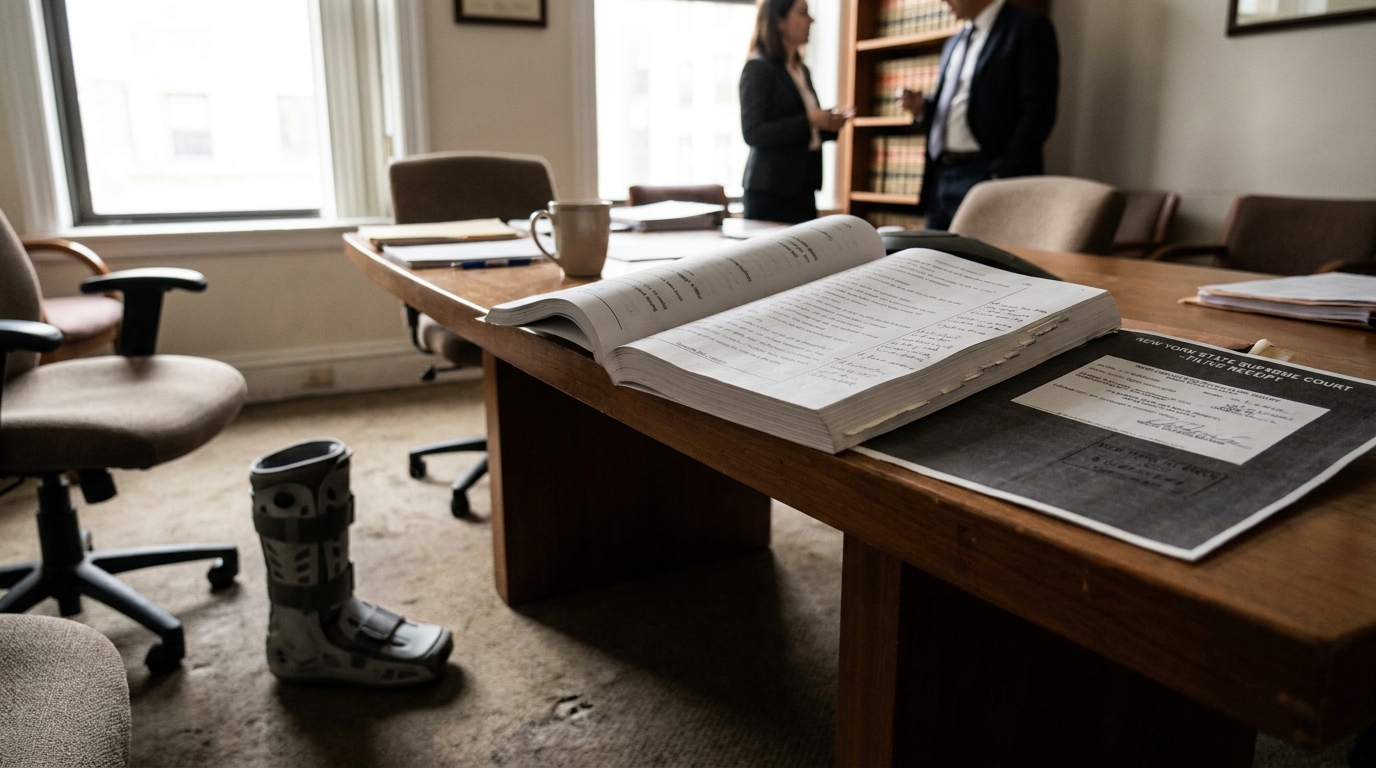
Many settle, yet some genuinely require a verdict. Whether a case proceeds to a jury depends on disputed facts, injury severity, and how firmly an insurer contests liability. When parties cannot agree on fault or injury value, the matter may require a courtroom decision.
This uncertainty is why early preparation matters. Insurers evaluate claims based on how trial-ready they appear, so building a fall case in New York with strong documentation improves your position even if you never see a courtroom. Our overview of NYC fall case trial preparation walks through what to expect once a matter is set for trial.
💡 Pro Tip: Treat every insurer conversation as part of the record. Stick to facts, avoid speculating about fault, and keep notes of who you spoke with and when.
Building the Foundation: Proving the Owner Was Negligent
Before any New York premises liability trial prep begins, the core of your claim must be established: the property owner’s negligence. This means showing the owner owed you a duty of care, a hazardous condition existed, the owner created the condition or knew or should have known about it, and the hazard caused your injury.
Notice is often the most contested element. A defendant may concede a spill existed but argue there was no actual or constructive knowledge in time to fix it, unless the defendant created the condition. This is where preserved evidence becomes decisive.
Evidence That Strengthens a Fall Injury Case
Strong fall injury case preparation depends on documentation gathered quickly, because conditions change and records disappear. Courts and juries respond to concrete proof rather than recollection alone. Key evidence categories include:
- Photographs and video of the hazard, lighting, and surrounding area
- Incident reports filed with the property owner or manager
- Cleaning logs, maintenance records, and surveillance footage showing how long the hazard existed
- Witness names and statements
- Complete medical records connecting injuries to the incident
💡 Pro Tip: Photograph your footwear and the exact fall location the same day if possible. Defense attorneys often raise footwear and floor conditions, so contemporaneous images can defeat later arguments.
Moving fast is critical because over time memories fade, evidence is lost, and witnesses disappear, which is why timely case development is essential.
Meeting Deadlines That Can Make or Break Your Case
In New York, the statute of limitations for slip and fall against a private party is generally three years from the accident date under CPLR § 214. This deadline applies to most negligence-based personal injury claims, and missing it can bar your case entirely. The statute setting this personal injury time limit lists personal injury actions among those that must be commenced within three years.
Deadlines vary depending on injury type and who caused it. Courts interpret extensions narrowly, so tolling or delayed-discovery arguments apply only in limited circumstances. Treating the three-year period as a firm boundary is safest.
How New York Deadlines Compare
A short comparison clarifies why identifying the correct defendant early is part of any slip and fall lawsuit steps in NYC. The table below summarizes general timeframes, though your specific facts may change which rule governs.
| Defendant Type | General Deadline | Pre-Suit Requirement |
|---|---|---|
| Private property owner or business | 3 years from the accident (CPLR § 214) | None specific to filing suit |
| Government agency (e.g., City property) | 1 year and 90 days | Notice of Claim within 90 days |
💡 Pro Tip: Confirm who actually owns and maintains the property where you fell. Sidewalk falls can involve a private owner, commercial tenant, or city entity, and the answer changes your deadline.
Special Rules When the Government Owns the Property
Falls on city property follow strict, separate rules that differ sharply from claims against private owners. When suing a government agency in New York, you generally must file a Notice of Claim within 90 days and file the lawsuit within one year and 90 days of when the claim accrues, or the case may be time-barred. These administrative steps are distinct from the civil lawsuit and cannot be skipped.
The pre-suit process can be demanding. The Comptroller’s Office may ask for photographs, medical records, bills, and insurance information, and you may be required to appear at a hearing. New York City’s published guidance on personal injury claims against the City confirms a notice of claim must be filed before a lawsuit.
If the City is found responsible, the Comptroller’s Office may extend a settlement offer, and claimants generally have 30 days to accept by signing a release. Because these timelines run quickly, organized fall injury documentation matters even more in government cases.
💡 Pro Tip: Calendar the 90-day Notice of Claim deadline separately from the lawsuit deadline. People sometimes assume the longer civil window applies and unintentionally forfeit valid government claims.
Anticipating the Defense: Comparative Negligence Strategy
A central part of trial strategy is preparing to rebut comparative-fault arguments before they gain traction. Defense attorneys commonly argue that an injured person was texting, wore inappropriate footwear, or ignored a visible warning. Because a jury may apportion fault, anticipating these claims is essential.
New York follows pure comparative negligence under CPLR § 1411. The comparative negligence statute provides that a claimant’s culpable conduct doesn’t bar recovery; instead, damages are reduced in proportion to the claimant’s fault share. This means even if a jury assigns you some responsibility, you may still recover a reduced amount.
Preparation is both legal and practical. Counter-evidence such as lighting conditions, absence of warning signs, and hazard duration can shift the fault analysis. For broader guidance on premises claims and getting ready for a fall trial, our resource on building a fall case New York provides additional context.
💡 Pro Tip: Keep a recovery journal documenting pain levels, missed work, and how injuries affect daily life. This record supports your damages claim and is difficult for the defense to dispute.
Frequently Asked Questions
1. Do most slip and fall cases in New York actually reach a jury?
No, many resolve before trial, though some do proceed. Whether a case goes to verdict depends on disputed liability and injury severity. Even so, preparing as if you’ll face a jury strengthens settlement discussions.
2. How long do I have to file a slip and fall lawsuit in NYC?
Against a private party, the deadline is generally three years from the accident date under CPLR § 214. Claims against government entities carry much shorter requirements, including a 90-day Notice of Claim. Because exceptions are interpreted narrowly, act early.
3. Can I still recover if I was partly at fault for my fall?
Generally yes, because New York applies pure comparative negligence under CPLR § 1411. Your damages may be reduced in proportion to your fault share, but partial fault doesn’t automatically bar recovery. The outcome depends on specific facts a jury weighs.
4. What evidence matters most when getting ready for a fall trial?
Documentation proving the hazard and the owner’s notice of it matters most. Photographs, maintenance and cleaning logs, surveillance footage, witness statements, and medical records all support your claim. Gathering these promptly prevents loss of key proof.
5. Are government claims handled differently from private claims?
Yes, government claims involve separate administrative steps and shorter deadlines. You may be required to file a Notice of Claim and attend a hearing before a lawsuit proceeds.
Putting Your Case in the Strongest Position
Whether or not your case reaches a courtroom, thorough preparation gives an injured New Yorker leverage and peace of mind. From proving the owner’s negligence and preserving evidence to meeting strict deadlines and rebutting comparative-fault defenses, each step builds toward fair compensation. Because outcomes depend on your fall’s specific facts, early and organized action consistently makes a difference.
If you were injured in a fall anywhere in New York City, take the next step toward protecting your claim with Pianko Law. Call our team at (646) 801-9675 or reach out through our secure contact form to discuss how to prepare your case for the road ahead.