When a Crash Victim Cannot Remember What Happened
Key Takeaways: The Noseworthy doctrine is a New York rule from the 1948 Court of Appeals decision Noseworthy v. City of New York that may allow a plaintiff who died in a crash or suffers accident-caused amnesia to be held to a lesser degree of proof. It operates through a jury instruction rather than automatic liability and does not shift the burden of proof or excuse establishing a prima facie case, including proximate cause. To qualify, a plaintiff must show by clear and convincing evidence that memory loss is genuine and directly caused by the accident. Courts may deny the charge where the plaintiff’s knowledge is not inferior to the defendant’s or where eyewitness testimony exists. Medical records, police reports, surveillance video, black box data, and scene photographs carry much of the case’s weight. Comparative fault under CPLR § 1411 may still reduce damages proportionally, and amnesia generally does not pause filing deadlines.
If you survived a serious collision but cannot recall the moments before impact, New York law may not leave you without a remedy. Under a 1948 Court of Appeals decision, a plaintiff who suffers accident-caused amnesia, or who died in the crash, may be held to a lesser standard of proof. This Noseworthy doctrine can matter enormously in unwitnessed accidents where only the other driver’s version survives.
If memory loss is complicating your claim, the team at Pianko Law can review what evidence exists and what New York law allows. Call (646) 801-9675 or schedule a free case review to discuss your options.
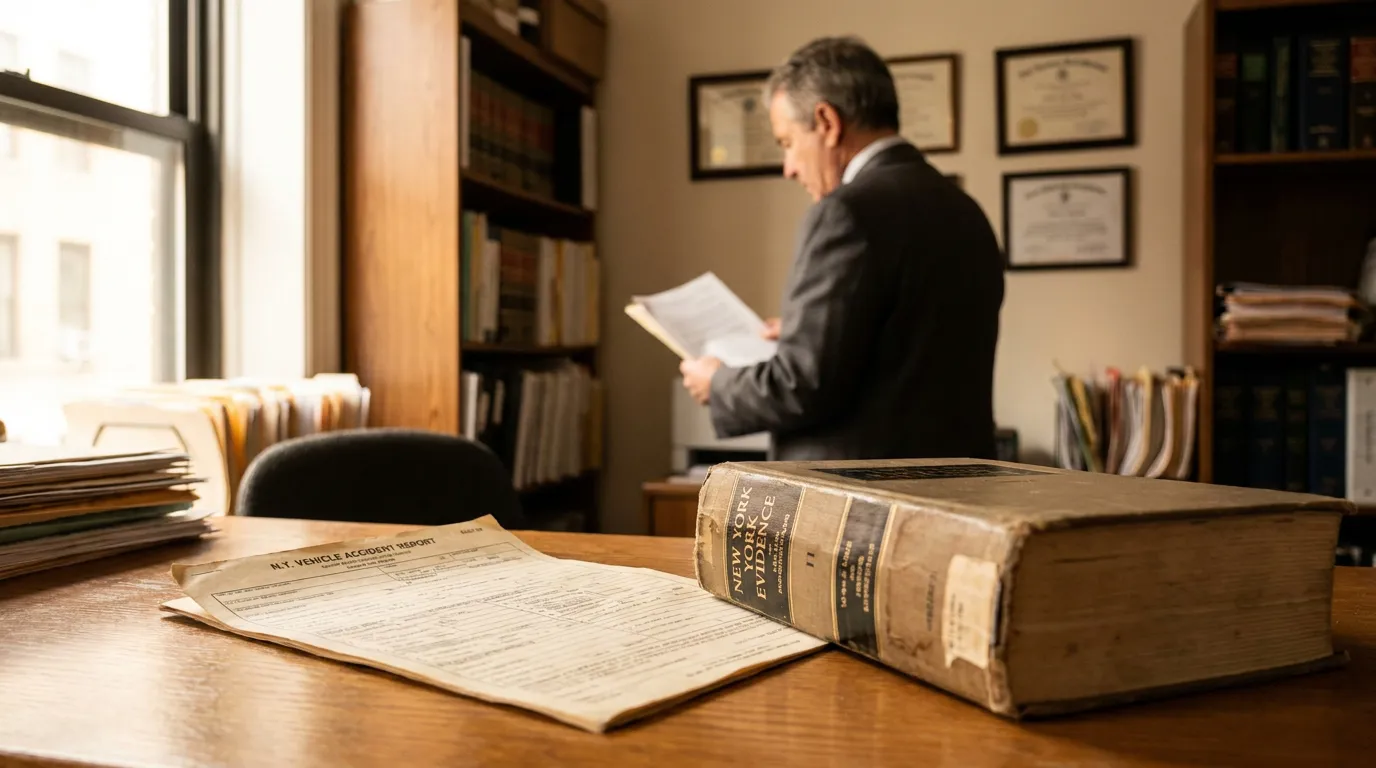
How the Noseworthy Doctrine New York Courts Apply Actually Works
The doctrine may permit a qualifying plaintiff to prevail on reduced proof, not to skip proof altogether. It grew from Noseworthy v. City of New York, 298 N.Y. 76, 80 N.E.2d 744 (1948), a wrongful death case where the decedent could not testify and the defendant’s employees provided the only account. Courts describe the rule as one born of necessity in civil burden of proof cases, because holding a plaintiff to the same standard where the defendant’s negligence destroyed the plaintiff’s ability to describe events would be unfair.
The doctrine generally functions through a jury charge rather than automatic liability. Where applicable, the trial court may instruct jurors that the plaintiff is held to a lesser degree of proof. That instruction shifts how jurors weigh circumstantial evidence such as vehicle damage, skid marks, event data recorder downloads, and traffic camera footage.
What the Doctrine Does Not Do
The rule has real limits that appellate courts enforce. It does not shift the burden of proof and does not relieve a plaintiff of proving a prima facie case, including that the defendant’s negligence proximately caused the accident. A plaintiff offering only speculation about the collision may not survive summary judgment, and courts have held the doctrine cannot supply inferences the record doesn’t otherwise support.
The doctrine generally does not activate before a negligence issue exists. Courts indicate the reduced-proof standard applies only after a triable issue regarding the defendant’s negligence has been raised. Speculative expert opinions may fail to raise that issue, which is why early, disciplined investigation matters.
The Threshold a Memory Loss Crash Claim Must Clear
A plaintiff seeking the benefit must prove the memory loss itself, and the standard is demanding. The Court of Appeals extended the rule to living amnesia victims in Schechter v. Klanfer, 28 N.Y.2d 228 (1971), but conditioned it on clear and convincing evidence that the victim cannot recall the incident and that the loss resulted directly from the accident. Courts examine whether the plaintiff’s knowledge is genuinely inferior to the defendant’s rather than applying the doctrine automatically.
Appellate decisions have refined when the instruction should be given. First Department authority indicates a charge may be warranted only where the jury is satisfied from medical and other evidence that memory loss makes it impossible to recall events at or about the crash time, and that accident-related injuries substantially caused that loss.
Gaps the plaintiff can fill often defeat the request. If the injured person’s testimony or nonparty eyewitness accounts supply the missing narrative, the instruction may be denied. Courts acknowledge the risk that fabricated amnesia claims are difficult to disprove, which is one reason the clear and convincing standard exists.
| Requirement | What courts generally look for |
|---|---|
| Causation of memory loss | Medical proof tying amnesia to the crash injuries |
| Standard of proof on amnesia | Clear and convincing evidence |
| Prima facie case | Still required, including proximate cause |
| Effect on burden | Burden of proof does not shift to the defendant |
| Timing | Applies after a triable issue of negligence is raised |
💡 Pro Tip: Ask treating physicians to document memory deficits contemporaneously. Records created months later may be more vulnerable to the argument that amnesia is unrelated to the collision.
Evidence That Supports a Lower Burden of Proof Argument
Because the doctrine reduces the quantity of proof rather than replacing it, the surrounding record often does the heavy lifting. Serious crash cases often turn on material that may disappear within weeks if no one preserves it. Prompt preservation letters and rapid scene work are critical.
- Emergency department and neurology records documenting loss of consciousness or amnesia
- Police accident reports, 911 audio, and body-worn camera footage
- Surveillance video from nearby businesses, residences, or transit facilities
- Vehicle black box data, telematics, and commercial fleet maintenance logs
- Photographs of final rest positions, debris fields, and roadway markings
Passengers, cyclists, and pedestrians frequently benefit most from this analysis. These claimants often have no memory of impact and no independent witnesses, especially in late-night or single-witness collisions. Working with a nyc car accident attorney early may help ensure medical narrative and physical evidence align.
Comparative Fault Still Applies to a New York Negligence Claim
Even a successful Noseworthy argument generally does not eliminate the defense that the injured person shared fault. New York historically operated as a pure comparative negligence jurisdiction under CPLR § 1411, which provided that culpable conduct attributable to the claimant does not bar recovery but diminishes damages proportionally. However, effective May 26, 2026, a new subsection, CPLR § 1411(b), was enacted as part of New York’s 2026 tort reform, imposing a modified comparative negligence standard for motor vehicle personal injury actions subject to Insurance Law Article 51. Under this new rule, a claimant whose fault exceeds the combined fault of the defendants is barred from all recovery in covered motor vehicle cases. Pure comparative negligence under CPLR § 1411(a) continues to apply in other personal injury contexts.
The comparative fault framework has important implications for crash victims. As legal reference sources explain, comparative negligence principles reduce recovery according to each party’s contribution to the incident. A plaintiff assigned forty percent of fault would recover sixty percent of proven damages. However, as of May 26, 2026, for motor vehicle accident cases subject to New York’s No-Fault law, CPLR § 1411(b) bars all recovery if the claimant’s fault exceeds the combined fault of the defendants, replacing the prior pure comparative negligence rule for crash cases with a modified standard. Pure comparative negligence, which allows recovery even when largely at fault, continues to apply in other personal injury contexts.
Why This Matters in Amnesia Cases
Defense counsel often uses the plaintiff’s memory gap to argue comparative fault by inference. When no one can describe what the injured driver did in the final seconds, insurers may suggest speeding, distraction, or unsafe lane changes without direct proof. Reconstruction evidence and the reduced-proof instruction can help counter that framing, though outcomes remain fact-dependent.
Filing Deadlines Do Not Pause for Memory Loss
Amnesia generally does not, by itself, extend the time to bring a claim. Most New York personal injury actions must be commenced within three years under CPLR § 214, while wrongful death actions must be brought within two years under EPTL § 5-4.1. CPLR § 208 tolls the period for insanity, but courts construe that toll narrowly, and memory loss alone is typically insufficient.
Claims involving municipal entities generally require a notice of claim within 90 days under General Municipal Law § 50-e, with suit usually commenced within one year and 90 days. These deadlines are separate from and much shorter than the general civil period. Because these rules are fact-sensitive, anyone in this situation must act quickly, and an experienced noseworthy doctrine new york lawyer can help identify which deadlines apply.
💡 Pro Tip: If a government vehicle, transit bus, or city-owned truck was involved, treat the timeline as urgent from day one. Administrative notice obligations operate independently of the general civil limitations period.
Common Challenges in an Unwitnessed Accident Case
The most frequent obstacle is proving amnesia is genuine and crash-related. Insurers may point to prior head injuries, substance use, or preexisting cognitive conditions to argue the memory loss has another cause. Neuropsychological testing and consistent treatment records may address that challenge.
A second challenge is building causation without the plaintiff’s narrative. Circumstantial proof must still connect the defendant’s conduct to the collision in a nonspeculative way. Additional guidance is available in our personal injury New York resource library.
Frequently Asked Questions
1. Does the Noseworthy doctrine mean the defendant has to prove they were not negligent?
No. The charge lowers the degree of proof required but does not shift the burden or excuse establishing a prima facie case.
2. Can the doctrine apply if my family member died in the crash?
Yes. The original 1948 decision arose in a wrongful death context where the victim could not testify, and the principle applies where death or memory-destroying injury prevents the plaintiff from describing the event.
3. What if there were eyewitnesses to my collision?
The doctrine can still apply, but courts may deny the instruction where nonparty eyewitness testimony fills the evidentiary gap or where the plaintiff’s knowledge is not inferior to the defendant’s. This is fact-specific.
4. How do I prove my memory loss was caused by the accident?
Courts look for medical and other evidence establishing that accident-related injuries substantially caused the amnesia, proven by clear and convincing evidence. Contemporaneous treatment records and neurological evaluations typically carry significant weight.
5. Will partial fault prevent me from recovering anything?
Under CPLR § 1411, culpable conduct by the claimant does not bar recovery in most personal injury contexts, and damages are reduced proportionally to the claimant’s share of fault. However, for motor vehicle accident cases subject to New York’s No-Fault law, CPLR § 1411(b), effective May 26, 2026, bars all recovery where the claimant’s fault exceeds the combined fault of the defendants.
Protecting a Claim You Cannot Personally Describe
The Noseworthy doctrine reflects a practical judgment that a negligent driver should not benefit from having caused the injury that silenced the person who could describe what happened. It is not a shortcut to liability. A plaintiff must still raise a triable issue on negligence, prove proximate cause, and satisfy a demanding evidentiary threshold on the amnesia itself, while comparative fault principles under CPLR § 1411 remain in play. Outcomes depend heavily on the medical record, physical evidence, and how quickly evidence is secured.
If you or a loved one cannot recall a serious collision, Pianko Law is prepared to investigate the crash and evaluate whether a reduced-proof instruction may be available. Call (646) 801-9675 or contact our team today to get started.
Disclaimer: This content is for informational purposes only and is not legal advice. Every case is unique, and results may vary. Consult an attorney about your specific circumstances.