Falling on Another Person’s Property in New York City: Who Actually Pays?
Key Takeaways: Responsibility for a slip and fall in New York City generally rests with the party that owned, occupied, or controlled the unsafe area, an owner, tenant, managing agent, or maintenance contractor, sometimes more than one. Because certain upkeep obligations are non delegable, an owner often cannot avoid liability by blaming a cleaning crew or snow removal vendor, though the owner may seek indemnification from that contractor. Under Administrative Code § 7-210, the abutting property owner generally must maintain the sidewalk, with an exception for owner-occupied one-, two-, or three-family residential properties. Most cases turn on notice, proof the owner created the hazard or knew or should have known about it, which often depends on cleaning logs, complaint records, and surveillance footage that is frequently overwritten quickly. Partial fault does not necessarily end a claim because New York’s pure comparative negligence rule generally reduces damages rather than barring recovery, but deadlines are unforgiving: generally three years for private defendants and far shorter notice-of-claim windows for government entities. Acting quickly to get medical care, document the scene, and demand preservation of video can be one of the strongest ways to protect your claim.
When you slip and fall on someone else’s property in New York City, responsibility generally falls on the party that owned, occupied, or controlled the area and failed to keep it reasonably safe. That party is often the building owner, but it may also be a commercial tenant, managing agent, or maintenance contractor, and more than one party may share blame. Because certain duties are non delegable, an owner frequently cannot escape responsibility simply by pointing to the janitorial company it hired.
If you were injured on a sidewalk, staircase, supermarket aisle, or apartment lobby anywhere in the five boroughs, the sooner you understand who may be accountable, the stronger your position may be. The team at Pianko Law helps injured New Yorkers identify potentially responsible parties and preserve evidence relevant to their claims. Call (646) 801-9675 or contact us now to discuss what happened.
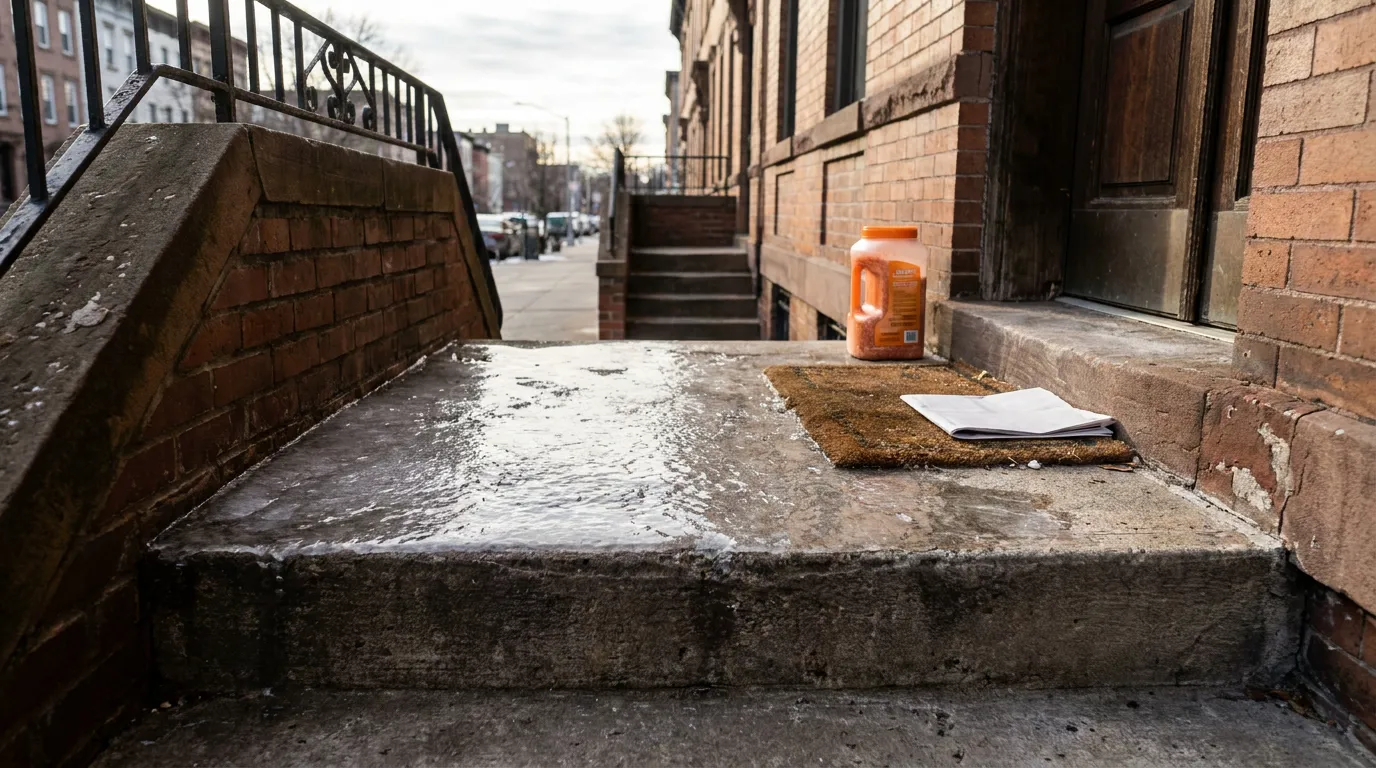
The Duty of Care Premises Owners Owe You in New York
New York property owners and occupiers generally owe those who enter their premises a duty to maintain the property in a reasonably safe condition under the circumstances. New York does not apply the old rigid categories of invitee, licensee, and trespasser; entrant status is instead one factor bearing on what is reasonable, and limited statutory protections may apply to trespassers and recreational users.
Reasonableness is fact-driven, not automatic. Courts may consider the nature of the property, foreseeability of the hazard, foot traffic, and whether inspection or cleaning routines existed. A useful overview appears in this discussion of premises liability claims published by the New York City Bar Association.
Not every fall creates a viable claim. If a hazard was open, obvious, and not inherently dangerous, or if there is no proof the defendant created or knew of the condition, recovery may be limited or unavailable. The law generally does not make owners insurers of every visitor’s safety.
Why a Non Delegable Duty Matters So Much in NYC Cases
A non-delegable duty generally stays with the party who owes it, even when that party hires someone else to perform the work. This may prevent a building owner from shifting blame entirely onto a cleaning crew, snow removal vendor, or property management company. The owner may still answer to the injured person, while separately pursuing indemnity or contribution from its contractor. Whether a duty is non delegable depends on its source, a statute, ordinance, or the owner’s retained control, rather than applying automatically to every task.
This matters enormously in New York City, where layers of ownership are common. A single Brooklyn mixed-use building might involve a titled owner, an LLC holding company, a managing agent, a ground-floor tenant, and an outside porter service. Determining liability often requires untangling leases, service contracts, and actual day-to-day control.
Parties Who May Share Responsibility
- The record owner of the building or land
- A commercial tenant responsible under its lease for the sidewalk or entryway
- A residential landlord or co-op/condo board
- A managing agent handling repairs and inspections
- Snow removal, cleaning, or maintenance contractors
- A construction contractor whose work created the hazard
💡 Pro Tip: Ask the store manager or superintendent, in writing if possible, who handles cleaning and maintenance for the area. That answer can sometimes reveal an additional insurance policy.
Sidewalk Duty NYC Residents Should Understand
Administrative Code § 7-210 generally places the duty to maintain most abutting sidewalks in a reasonably safe condition, including snow and ice removal, on the adjoining property owner rather than the City. A fall on a cracked or icy sidewalk in Queens or the Bronx may be a claim against the abutting building owner.
There are meaningful carve-outs. Owner-occupied one-, two-, and three-family residential properties used exclusively for residential purposes are excepted from § 7-210’s liability shift, so claims involving those parcels generally proceed against the City, subject to its prior written notice requirements, or against an owner who affirmatively created the hazard or made special use of the sidewalk. Whether a property falls inside or outside the exception is fact-specific.
Proving Notice: The Element Insurers Fight Hardest
Liability in a NYC slip-and-fall case often turns on whether the owner created the condition or had actual or constructive notice of it and failed to remedy it within a reasonable time. Actual notice generally means someone knew about the spill, broken step, or ice patch. Constructive notice generally means the condition was visible and existed long enough that a reasonably attentive owner should have discovered and corrected it.
Notice arguments are frequently won or lost with documents you may not be able to get on your own. Cleaning logs, inspection sheets, prior complaint records, work orders, and surveillance footage frequently influence these cases, and footage is often overwritten within days or weeks. For more, review this explanation of the four elements of a slip and fall case.
Municipal defendants face a stricter notice framework. Administrative Code § 7-201(c), the Pothole Law, generally bars claims for defective streets and sidewalks the City is responsible for unless written notice was previously given to the Department of Transportation, including through the Big Apple Pothole and Sidewalk Protection Committee maps, or a recognized exception applies. Similar statutes apply outside the City; for example, NY CPLR § 9804 provides that a village generally cannot be held liable for injuries from a defective, unsafe, or obstructed sidewalk, street, or crosswalk, or from snow or ice, unless written notice was given to the village clerk and the village failed to repair it within a reasonable time. Prior written notice regimes are a major reason municipal claims may fail.
Comparative Fault: Your Own Conduct Does Not Necessarily End the Case
New York follows a pure comparative negligence rule, so partial fault generally reduces recovery rather than eliminating it. Under NY CPLR § 1411, culpable conduct attributable to the claimant, including contributory negligence and assumption of risk, does not bar recovery, but damages are diminished proportionally. A plaintiff found partly responsible may still recover, with the award reduced by the assigned percentage.
Expect the insurer to argue you were distracted, wearing the wrong shoes, or ignoring a warning sign. This is a common strategy, not necessarily a sign your claim is weak. Fault percentages are ordinarily decided by the trier of fact, typically a jury, rather than an adjuster.
💡 Pro Tip: Avoid apologizing or saying "I wasn’t watching" at the scene. Neutral, factual statements can help protect you without misrepresenting anything.
Deadlines That Can End a Claim Before It Starts
New York generally requires personal injury lawsuits, including slip and fall claims, to be filed within three years of the incident under CPLR 214. Different periods can apply to certain claims, and tolling rules may apply for infancy or disability, but missing the deadline may bar recovery regardless of injury severity.
Claims involving government entities operate on a far tighter schedule. For claims against the City of New York, General Municipal Law § 50-e generally requires a notice of claim within 90 days of accrual, and § 50-i generally requires suit within one year and 90 days. Comparable rules apply elsewhere; under NY CPLR § 9802, an action against a village generally must be commenced within one year after accrual, and only if a notice of claim was served per General Municipal Law § 50-e. Notice-of-claim requirements are separate from the statute of limitations, and satisfying one does not satisfy the other.
| Defendant Type | General Filing Window | Additional Prerequisite |
|---|---|---|
| Private owner or tenant | Generally 3 years (CPLR 214) | None specific |
| Municipal or public entity | Often 1 year and 90 days or less | Verified notice of claim required |
| Certain public authorities | Varies by enabling statute | Statute-specific notice rules |
Discovery-based extensions exist, but courts interpret them narrowly. NY CPLR § 203(g) provides that where a limitations period runs from when facts were discovered or could reasonably have been discovered, the action must be commenced within two years after that discovery, or within the otherwise applicable period, whichever is longer. This applies only where a statute expressly measures the period from discovery, and should never be assumed to extend an ordinary slip and fall deadline.
Practical Steps After a Fall on Someone Else’s Property
What you do in the first days after a fall can shape the entire injury claim. Seek medical evaluation promptly, even if symptoms seem mild, because head, neck, and soft-tissue injuries commonly present with delay. Gaps in treatment are among the first things a carrier may highlight.
Evidence Worth Preserving Immediately
Documentation collected at or near the scene tends to be among the most persuasive evidence available later. Photograph the hazard from multiple angles and distances, capture lighting conditions and any missing warning cones, and save the footwear you were wearing. Get witness names and phone numbers, and report the incident to a manager or superintendent while requesting a copy of any written report.
A written preservation demand for video should generally go out quickly. Retail and residential systems frequently overwrite recordings on short cycles, and once footage is gone, proving how long the condition existed may become considerably harder. Working with a slip and fall attorney NYC residents trust may help ensure those demands are sent before the window closes.
💡 Pro Tip: Keep a short daily journal of pain levels, missed work, and activities you cannot perform. Contemporaneous notes generally carry more weight than reconstructed memory months later.
Frequently Asked Questions
1. Can I still recover if I was partly at fault for my fall?
Potentially yes. New York’s pure comparative negligence rule generally reduces damages by your percentage of fault rather than barring recovery, though the percentage is decided by the trier of fact based on the evidence.
2. What if I fell on a public sidewalk in front of a store?
The abutting property owner generally bears the sidewalk maintenance duty under Administrative Code § 7-210, except for owner-occupied one-, two-, or three-family homes used exclusively for residential purposes. The correct defendant depends on the property’s classification and use, and a commercial tenant’s lease may add another responsible party.
3. How long do I have to bring an injury claim in New York City?
Personal injury actions generally carry a three-year deadline, but claims against public entities generally require a notice of claim within 90 days and suit within one year and 90 days. The deadline that applies depends on who the defendant is.
4. Does a contractor’s negligence let the owner off the hook?
Often not. Where the owner’s duty is non delegable, the owner may remain answerable to the injured person even though an outside vendor performed the work, and may then seek indemnity from that vendor. Whether the duty is non delegable depends on its source and context.
5. What if the hazard was obvious?
Proof that a condition was open and obvious generally bears on comparative fault rather than eliminating the owner’s duty, though a condition that is both open and obvious and not inherently dangerous may defeat a claim. Courts evaluate these arguments on the specific facts.
Sorting Out Responsibility Takes More Than a Guess
Determining who may be responsible after a slip and fall in New York City rarely produces a single, obvious answer. Responsibility may be shared with tenants, managers, and contractors, and non delegable duty principles may keep the owner in the case even when others handled maintenance. Layered on top are notice requirements, comparative fault defenses, and deadlines that differ sharply between private and governmental defendants. Every outcome depends on the specific facts, the available evidence, and how quickly that evidence is secured.
You do not have to untangle leases, contracts, and statutory deadlines on your own. Pianko Law is trusted by injured New Yorkers across Brooklyn, Queens, the Bronx, and Manhattan to investigate potential negligence by property owners and pursue compensation that may be available. Call (646) 801-9675 or schedule your free consultation today to have your situation reviewed.
Disclaimer: This content is for informational purposes only and is not legal advice. Every case is unique, and results may vary. Consult an attorney about your specific circumstances.