When a Warning Sign Does Not Actually Warn
Key Takeaways: In New York, a wet floor sign placed too far from a spill may not protect a property owner from liability, because a warning generally must reasonably alert visitors to the specific hazard. Courts and juries may look at how far the sign was from the wet area, whether you could see it, and whether it was blocked or moved. A misplaced sign can potentially help an injured person’s case, since it may show the owner had actual notice of the spill. Under New York’s pure comparative negligence rule in CPLR § 1411, any fault of your own generally reduces your damages rather than barring recovery. Deadlines matter. Many private claims have a three-year limit, and claims against government entities have much shorter notice requirements, so acting quickly and saving evidence like photos and surveillance footage is important.
A wet floor sign placed too far from a spill may not protect a property owner from liability in New York. Courts generally ask whether a warning was adequate to alert visitors to the specific hazard, and a sign across the aisle or around the corner may fail that test. Under New York’s pure comparative negligence rule, shared fault generally reduces your recovery rather than eliminating it.
If you were hurt in a fall like this, you can ask an attorney about your case. Pianko Law represents injured people throughout New York City in premises liability matters. Call (646) 801-9675 or contact us now to talk through what happened and what your options may be.
Why Property Owners Must Give Warnings That Actually Work
Property owners and occupiers in New York generally have a duty to keep their premises reasonably safe and to warn visitors about hazards that are not open and obvious. The New York City Bar explains that premises liability duties include both maintaining safe conditions and warning about dangers. Even when a hazard is open and obvious, New York courts generally hold that this affects the injured person’s comparative fault, not whether the owner had a duty.
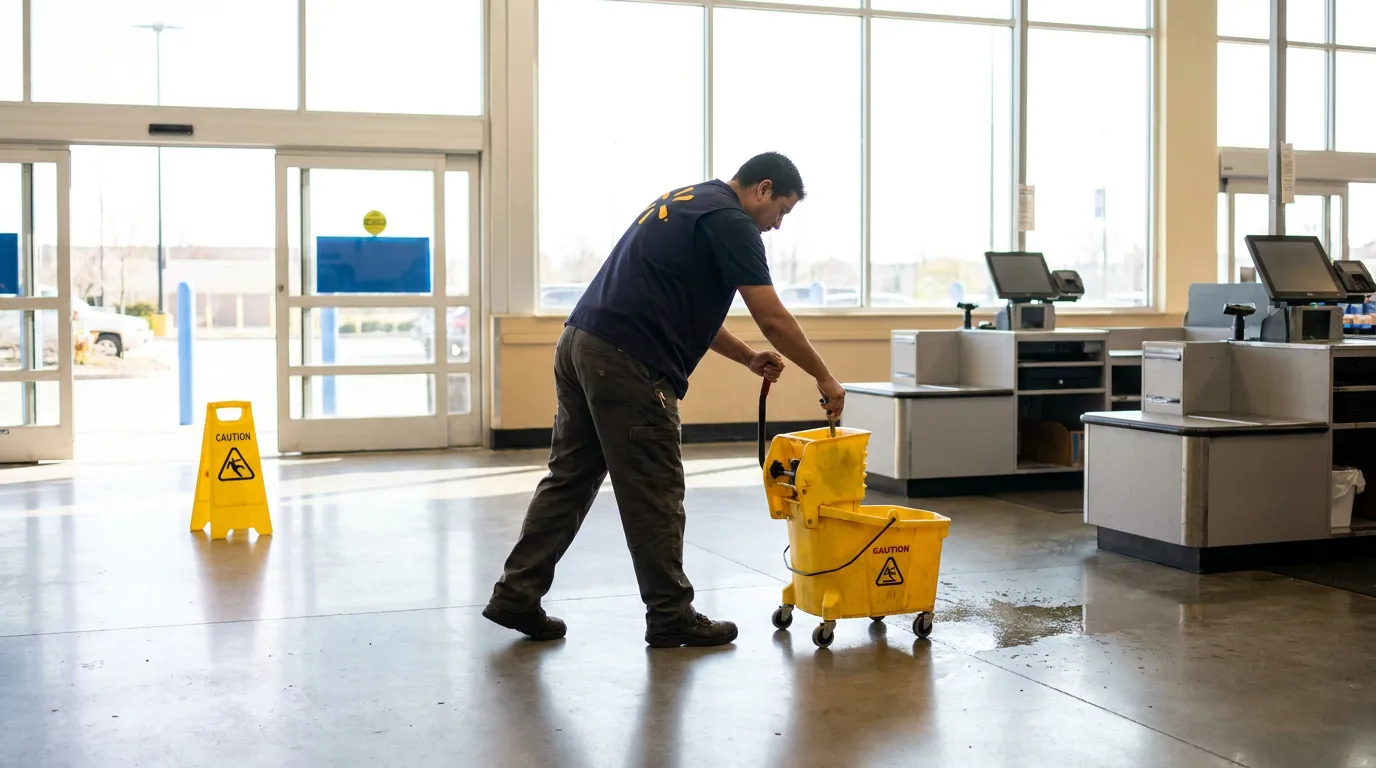
A warning generally must be reasonably calculated to alert visitors to the danger. Putting out a sign is not necessarily a meaningful warning. If a sign stands at one end of a long corridor while the puddle sits 30 feet away near a turn, a shopper may reasonably believe the hazard has passed. An injured person may argue the warning was inadequate even though a sign technically existed.
New York statutes also reinforce that owners remain responsible for their property. For example, N.Y. Real Property Actions and Proceedings Law § 778(6) provides that even when a court appoints an administrator to run a residential building, the appointment does not relieve the owner of liability for injuries caused by conditions of the premises. Tenants, managers, or maintenance contractors may also share liability depending on who controlled the area.
What Makes a Wet Floor Warning Inadequate?
Whether a warning was adequate depends heavily on the facts. There is no single statutory distance requirement for wet floor signs in New York. Courts and juries may consider factors such as:
- How far the sign was from the actual wet area
- Whether the sign was visible from the direction you were walking
- Whether the spill covered a larger area than the sign suggested
- Whether the sign had fallen over, been moved, or been blocked by displays or carts
- How long the hazard existed before your fall
💡 Pro Tip: If you can safely do so, photograph the sign and the spill in the same frame, or take a short video walking from the sign to the spot where you fell. That footage may help show the distance better than a written description.
Proving a Slip and Fall No Wet Floor Sign Case or Poorly Placed Sign Claim
Inadequate warning cases and a slip and fall no wet floor sign case often rest on the same core issue: notice. An injured person generally must show the owner either created the hazard or knew or should have known about it and failed to fix it or warn about it within a reasonable time. Constructive notice generally requires showing that the condition was visible and apparent and existed long enough for employees to discover and fix it.
Placing a Sign Can Prove the Owner Knew
A poorly placed sign may help your case. If employees set out a wet floor sign, that may be strong evidence the business had actual notice of a wet condition. The remaining question often becomes whether the response was reasonable. A business that placed the warning where nobody would connect it to the hazard may have fallen short of its duty.
When No Sign Was Used at All
When a store never put out any sign, notice may still be proven through other evidence. Inspection records, cleaning logs, surveillance video, and witness statements may show how long the liquid sat on the floor. You can learn more about how constructive notice can prove a store knew about a spill even without direct proof that an employee saw it.
How Shared Fault Affects Slip and Fall Liability in New York
New York follows a pure comparative negligence rule, so your own carelessness generally reduces your damages instead of barring them. Under CPLR § 1411, the claimant’s culpable conduct, including contributory negligence or assumption of risk, does not bar recovery in a personal injury action. Damages are reduced in proportion to the claimant’s share of fault.
Insurers often argue that the injured person should have seen the sign. A jury might find the business partly negligent for poor placement while also assigning some fault to the injured person. For example, if a jury awards $100,000 and finds you 20% at fault, the recoverable amount would generally drop to $80,000.
The Defense Must Raise Your Fault Formally
A defendant who wants to reduce damages based on your conduct generally must plead that defense. N.Y. CPLR § 3018(b) lists "culpable conduct claimed in diminution of damages" as an affirmative defense that must be pleaded. Under CPLR § 1412, the defendant also bears the burden of proving your culpable conduct. You may respond with evidence that the warning was so far from the hazard that it gave no real notice of where the danger was.
| Issue | What the Owner May Argue | How an Injured Person May Respond |
|---|---|---|
| Sign present nearby | "The plaintiff was warned." | The sign may have been too far away to identify the hazard. |
| Visible spill | "The plaintiff should have looked." | Lighting, floor color, or crowds may have hidden the liquid. |
| Shared fault | "The plaintiff was distracted." | Fault is generally apportioned under CPLR § 1411, not a bar. |
| Notice | "We did not know about the spill." | The sign itself may show the owner knew. |
What Compensation May Look Like After the Verdict
After a jury verdict, the trial court generally applies certain adjustments before entering judgment. In actions governed by CPLR Article 50-B, CPLR § 5041(a) directs the court to apply applicable rules of law, including set-offs, credits, and comparative negligence under CPLR § 1411.
Collateral source payments may also reduce part of an award. Under N.Y. CPLR § 4545(a), the court may reduce awards for costs such as medical care or lost earnings if those costs were or will, with reasonable certainty, be covered by a collateral source. Life insurance and payments that carry a statutory right of reimbursement are excluded. Under CPLR § 4545(b), voluntary charitable contributions are not treated as a collateral source.
Larger awards may be paid partly over time. Under N.Y. CPLR § 5041(b) and (e), past damages and future damages up to $250,000 are generally paid in a lump sum. Future damages above that amount are generally paid in periodic installments through an annuity, unless the parties agree otherwise.
Deadlines That Can Affect Your Claim
Timing matters in every slip and fall case. Under N.Y. CPLR § 3018(b), the statute of limitations is an affirmative defense. A defendant who properly raises it may get an otherwise valid claim dismissed if the lawsuit was filed late. Many personal injury claims against private parties are subject to a three-year limitations period under CPLR § 214.
Falls on government property follow stricter rules. Claims against municipalities generally require a notice of claim served within 90 days under General Municipal Law § 50-e. The lawsuit itself is typically due within one year and 90 days under General Municipal Law § 50-i. Many municipalities also require prior written notice of certain defects. Missing any of these deadlines may jeopardize your case.
💡 Pro Tip: Send a written request to preserve surveillance footage as soon as possible. Many businesses record over video within days or weeks, and that footage may show exactly where the sign stood when you fell.
Frequently Asked Questions
1. Can I sue if there was a wet floor sign but I still fell?
Possibly. If the sign was too far from the spill, hidden, or did not reasonably identify the hazard, you may be able to argue the warning was inadequate. The outcome depends on the specific facts.
2. What if the store says I wasn’t paying attention?
Under CPLR § 1411, your own fault generally reduces your damages proportionally rather than barring your claim. The defendant must plead this defense under CPLR § 3018(b) and bears the burden of proving it under CPLR § 1412.
3. Do I have a case in a slip and fall no wet floor sign situation?
You may, if you can show the owner created the hazard or had actual or constructive notice of it and failed to fix it or warn about it in time. Cleaning logs and video can be important.
4. What evidence should I collect after a fall?
Photos of the spill and the sign, witness contact information, your medical records, and an incident report can all help. Seek medical care promptly, since some injuries appear later.
5. Does insurance I already have reduce my recovery?
It may. CPLR § 4545 allows certain collateral source reductions. It excludes life insurance, payments that carry a statutory right of reimbursement, and voluntary charitable donations.
Protecting Your Rights After a Poorly Warned Fall
A wet floor sign is supposed to warn you where the danger is, and a sign placed too far away may not meet that duty. New York law generally lets injured people recover even when they share some fault, with damages reduced under CPLR § 1411. Proving notice, documenting the sign’s placement, and acting before deadlines pass can all shape the strength of a claim.
An experienced slip and fall no wet floor sign lawyer can help you gather evidence and respond to insurer defenses. Pianko Law is trusted by clients across New York City for handling premises liability claims. Call (646) 801-9675 or schedule your consultation today to discuss your fall. Learn more about our work as a slip and fall no wet floor sign lawyer serving injured New Yorkers.
Disclaimer: This content is for informational purposes only and is not legal advice. Every case is unique, and results may vary. Consult an attorney about your specific circumstances.